StanCOMP Compliance: SFC VATP CRA & Cold Wallet Rules

StanCOMP Compliance: SFC VATP CRA & Cold Wallet Rules
Hong Kong’s virtual asset regime is now mature enough that “good enough” policies get flagged in day one inspections. Two areas trigger most findings on VATPs and VASPs: client risk assessment (CRA) and custody/cold wallet controls. If you’re building or upgrading in 2025, here’s how to align with the Securities and Futures Commission (SFC) expectations without guesswork.
Why this matters now
- The SFC’s Guidelines for Virtual Asset Trading Platform Operators are live and specific about custody and client onboarding. See Part X on custody and safeguarding of client assets.
- The FSTB/SFC are moving to regulate standalone VA custodians; AML/CFT obligations under AMLO Schedule 2 will apply in full.
- The joint VA circular for intermediaries remains the reference point for knowledge tests, suitability, and distribution conduct around VA exposure.
Links:
- SFC Guidelines for VATP Operators (Part X custody): https://www.sfc.hk/-/media/EN/assets/components/codes/files-current/web/guidelines/guidelines-for-virtual-asset-trading-platform-operators/guidelines-for-virtual-asset-trading-platform-operators.pdf
- SFC/HKMA VA guidance hub (intermediaries’ VA activities): https://www.sfc.hk/en/Intermediaries/Guidance-and-FAQs/Guidance-on-virtual-assets
- AMLO Schedule 2 (CDD/record-keeping): https://www.elegislation.gov.hk/hk/cap615!en
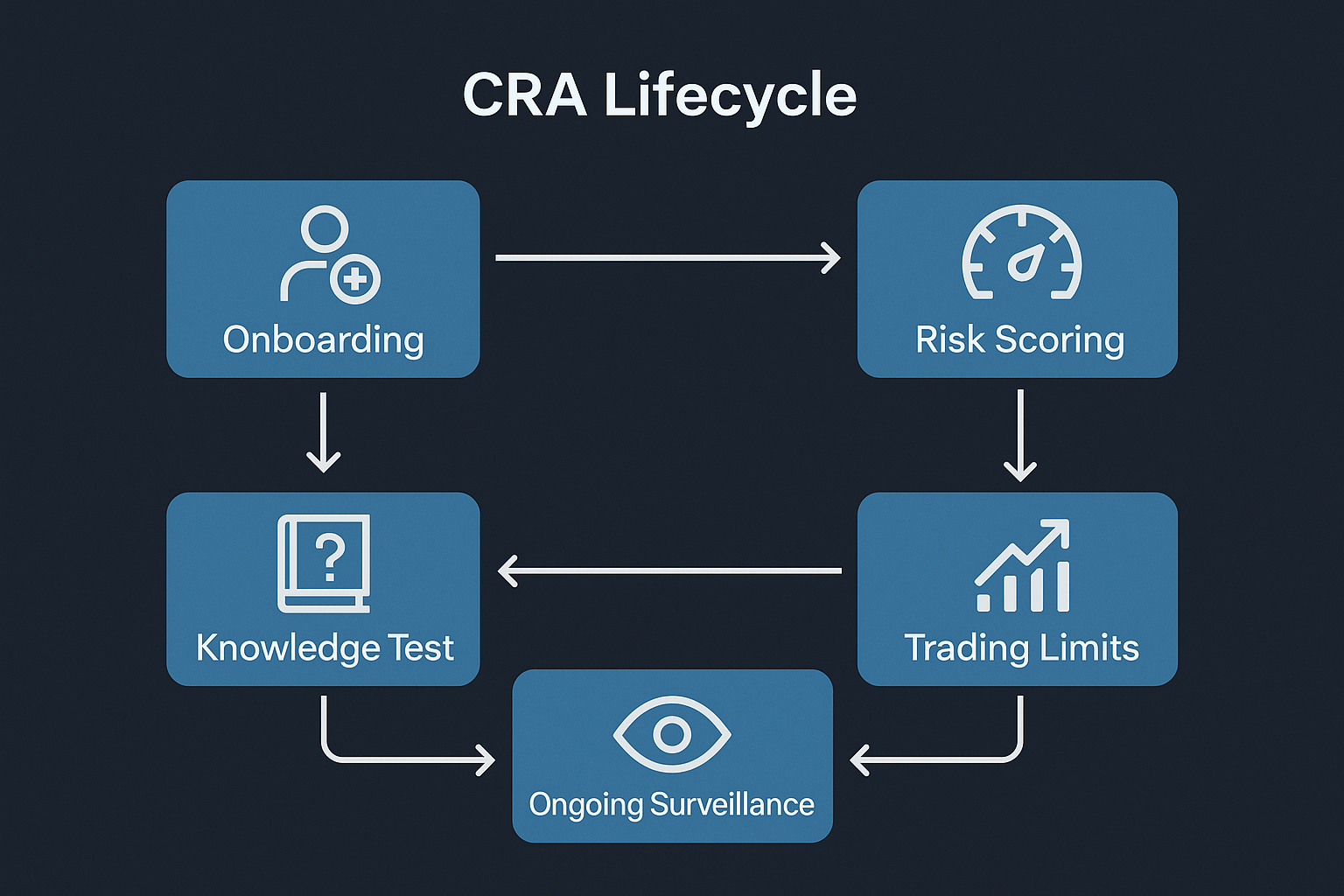
Client Risk Assessment (CRA): what “good” looks like SFC expects an end-to-end process that links onboarding decisions to live trading limits and ongoing surveillance. In practice:
-
Profile and knowledge test:
- Assess VA knowledge (training, experience, prior trading). If a retail client fails, provide structured education before enabling trading.
- Capture financial situation and loss tolerance; set quantitative loss and concentration limits tied to this profile.
-
Appropriateness and suitability:
- For complex tokens or products, run an appropriateness check before enabling access; restrict if the investor fails.
- Link listing tiers to client segments (e.g., retail access only to tokens meeting liquidity, free-float, and venue standards set in your listing policy).
-
Ongoing controls:
- Dynamic limits that adjust with volatility and realized losses.
- Triggers to re-paper or re-assess after material changes (income drop, leverage increase, or large external VA transfers).
Cold wallet and custody: Part X essentials Part X of the SFC VATP Guidelines sets a high bar. Key points operators should evidence:
-
Cold storage predominance:
- Maintain the vast majority of client VAs in cold wallets with tightly controlled hot wallet caps. Market practice in Hong Kong is around ≥98% cold and ≤2% hot.
-
Segregation and control:
- Segregate client and house assets on-chain and in books. No re‑hypothecation.
- Implement multi-person controls (e.g., m-of-n), dual-site key shards, and strict access logging.
-
Insurance/compensation arrangements:
- Maintain compensation or insurance arrangements proportionate to hot wallet exposure and operational risk, as specified by the SFC. Evidence coverage terms, insured perils, and claim processes.
-
Business continuity:
- Predefined disaster recovery for key loss and facility compromise; test key ceremonies and recovery drills on a scheduled basis with audit evidence.
Wallet due diligence under AML/CFT The AML/CFT Guideline clarifies wallet-type risk treatments:
-
Custodial wallet (third-party):
- Identify and risk-rate the provider; obtain KYC comfort and sanctions screening attestation where feasible.
- Verify ownership/control linking the customer to the custodial account.
-
Self-hosted wallet (customer or FI/VASP-operated):
- Ownership verification (signed message, SSO integration, or micro-transaction proof).
- Travel Rule compliance and counterparty VASP due diligence on outbound transfers.
-
Record-keeping:
- Retain wallet linkage evidence, Travel Rule data, and transaction rationale per AMLO Schedule 2.
What to do this quarter
- Map CRA to controls: tie each risk score band to concrete trading, leverage, and withdrawal limits. Document breach handling.
- Run a custody gap test: cold/hot ratios, key ceremony SOPs, DR testing cadence, insurance coverage adequacy.
- Strengthen wallet DD: standardize signed-message flows and Travel Rule routing; document exceptions.
- Watch OTC and custodian regulation: if you offer OTC or third-party custody, prepare for licensing perimeter changes consulted by FSTB/SFC.
If you’re unsure where your gaps are, start with custody and CRA. That’s where inspectors look first.