
StanCOMP Compliance: HKMA Stablecoin & Fund Tokenisation

HKMA stablecoin regime meets fund tokenisation: what actually changes in 2025
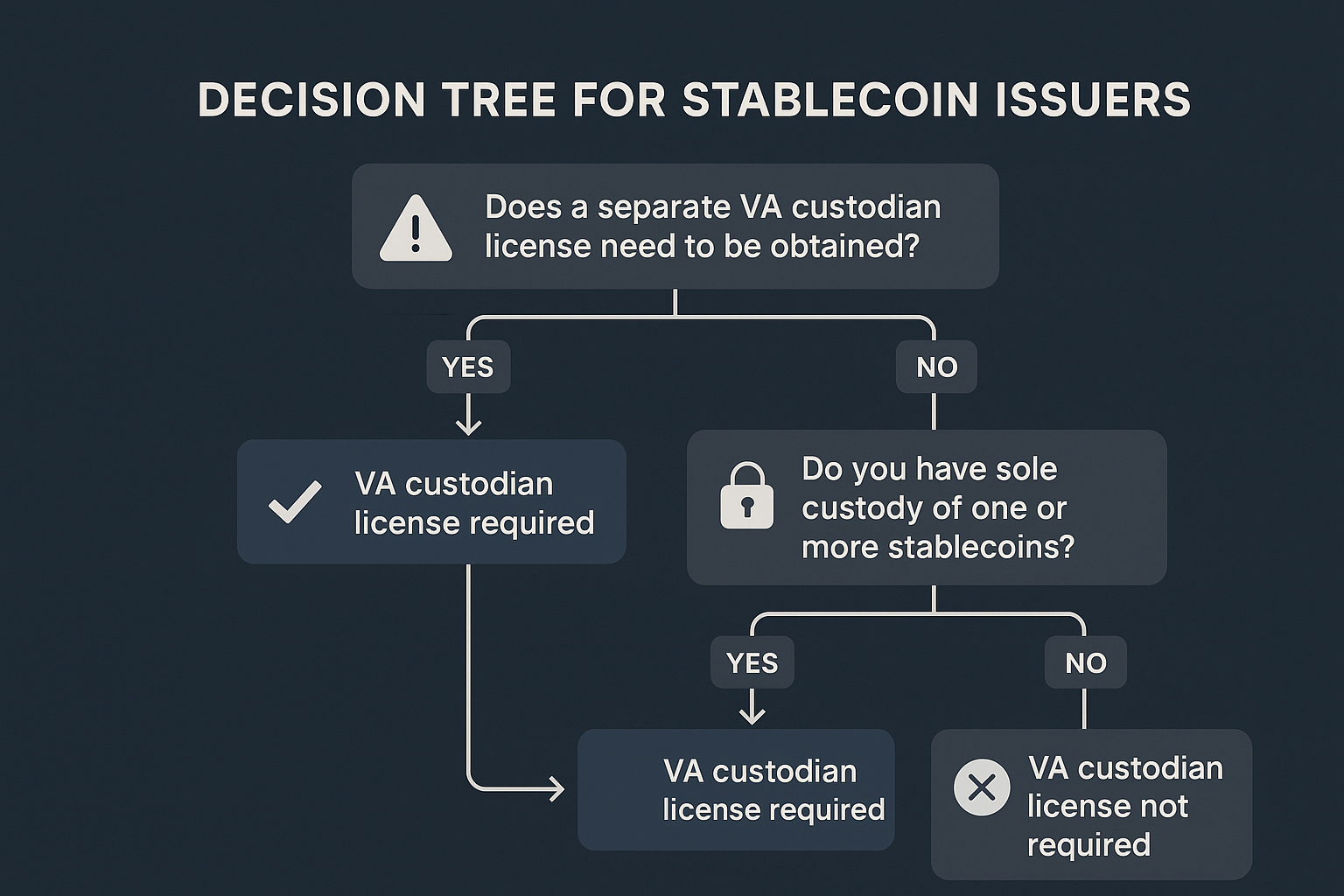
Stablecoin rules are finally getting teeth in Hong Kong. On 26 May 2025, the HKMA issued a consultation on AML/CFT requirements for HKMA‑licensed stablecoin issuers, with a clear goal: licensees must implement effective systems and controls to prevent ML/TF in connection with their stablecoin activities. In parallel, the Government’s proposal to regulate virtual asset custodians clarifies how custody will be supervised — including an exemption where an HKMA‑licensed stablecoin issuer custodies only its own coin.
This matters for anyone building tokenised funds, payments rails, or treasury products.
A stablecoin is now infrastructure.
The two anchors: AML/CFT and custody
- AML/CFT expectations: The HKMA’s consultation sets out requirements for licensees (i.e., HKMA‑licensed stablecoin issuers) to implement end‑to‑end AML/CFT controls, including risk assessment, CDD, ongoing monitoring, sanctions screening, record‑keeping, and governance. See the HKMA’s consultation page for details and next steps.
- Custody perimeter: Under the Government’s “Public Consultation on Legislative Proposal to Regulate Virtual Asset Custodian Services,” a stablecoin issuer licensed by the HKMA that custodies only the stablecoins it issues for clients is exempt from separate VA custodian licensing, even if it safekeeps private keys — because it is already under HKMA supervision. Investor protection expectations still apply: segregation of client assets, adequate audits, and robust records.
References:
- HKMA consultation (26 May 2025) — AML/CFT framework for licensed stablecoin issuers: https://www.hkma.gov.hk
- Public consultation on VA custodians — custody, segregation, audit, and exemption for single‑issuer custody: https://www.fstb.gov.hk
Where algorithmic stablecoins stand
If you’re working on algorithmic models: pause. Hong Kong’s regime focuses on fiat‑referenced stablecoins (FRS). Algorithmic designs without high‑quality reserve backing are out of scope for the forthcoming licensing regime and are not expected to be permitted for retail issuance. If your economics depend on seigniorage and reflexivity instead of cash‑equivalent reserves, you will face a wall with licensing.
Tokenisation of funds: why this ties together
Fund tokenisation in Hong Kong has moved from pilot to production, with the SFC allowing tokenised SFC‑authorised products subject to additional safeguards (smart‑contract risk, transfer controls, and clear off‑chain/on‑chain record reconciliation). In practice:
- A tokenised fund will need compliant on/off‑ramps. Licensed, reserve‑backed stablecoins are the cleanest subscription/redemption rail.
- Investor protection stacks across the chain: SFC product rules on the fund side, HKMA AML/CFT and custody expectations on the stablecoin/payment leg.
- Custody design must respect segregation at each hop (fund registrar, VA custodian, and—if relevant—the issuer’s own wallet framework).
What to do now (practical 90‑day plan)
- Governance and reserves
- Finalise board‑approved reserve policy (asset types, concentration limits, same‑day liquidity). Conduct a dry‑run attestation with your auditor.
- AML/CFT build‑out
- Document a VA‑specific Business Risk Assessment and ML/TF risk map.
- Calibrate CDD tiers and triggers (e.g., enhanced due diligence over HKD 120,000 cumulative monthly inflows — illustrative).
- Implement travel‑rule‑equivalent controls for token transfers where applicable, plus sanctions/PEP screening and blockchain analytics for address risk.
- Custody controls
- Establish segregated on‑chain wallets and books/records mapping client entitlements to UTXOs/addresses.
- Implement MPC/HSM key management, dual control, and incident playbooks; evidence quarterly access reviews.
- Tokenised fund integration
- Build transfer restrictions into the fund token (whitelists by investor category, hard caps per prospectus).
- Reconcile on‑chain registers with fund TA records daily; resolve deltas within T+1.
- Engage regulators early
- Pre‑application meeting with HKMA (issuer) and SFC (product/intermediary) to validate scope and timelines.
Quick licensing map
| Activity | Primary regulator | Licence needed | Notes |
|---|---|---|---|
| Issue a fiat‑referenced stablecoin to the public | HKMA | Stablecoin issuer licence (forthcoming) | Algorithmic models not expected to qualify. |
| Custody only your own issued stablecoin for clients | HKMA (supervision) | No separate VA custodian licence | Exempt under the VA custodian proposal; still must meet segregation/audit/records. |
| Third‑party custody of client VAs (not just your coin) | FSTB/SFC framework | VA custodian licence (proposed) | Full custody requirements apply. |
| Offer a tokenised SFC‑authorised fund | SFC | Product authorisation/intermediary licensing | Additional tokenisation safeguards and disclosure needed. |
Bottom line
Hong Kong is drawing a clean line: reserve‑backed, well‑governed stablecoins will be the compliant rails for tokenised finance; everything else sits outside. If you align custody and AML/CFT early, your tokenised fund or payments product can launch faster and with fewer surprises.
Need a gap assessment or pre‑app checklist? StanCOMP helps issuers, custodians, and fund managers navigate the HKMA/SFC stack with concrete deliverables, not slideware.


