SFC Fit-and-Proper & Travel Rule: HK Compliance Guide

SFC Fit-and-Proper & Travel Rule: HK Compliance Guide
If you’re chasing a Hong Kong virtual asset licence in 2025—whether as a VATP operator today or a VA custodian tomorrow—two items will make or break your timeline: proving you’re fit and proper, and showing you can execute the Travel Rule. Both are non‑negotiable under the post‑June 2023 regime.
Why it matters now Hong Kong’s regime for Virtual Asset Trading Platforms (VATPs) has been fully live since June 2023. Anyone operating a VATP needs an SFC licence and must pass a fit‑and‑proper test that explicitly captures AML/CTF and investor protection expectations. The SFC has broad supervisory, investigative and intervention powers. In parallel, the Government has proposed a licensing/registration regime for Virtual Asset Custodians; the same fit‑and‑proper standard will apply not just to the corporate, but also to substantial shareholders and individuals performing VA custody functions.
Fit-and-proper: what the SFC looks for At its core, “fit and proper” assesses honesty, competence, financial soundness, and governance. For VATPs (and proposed VA custodians), the existing criteria under the Anti‑Money Laundering and Counter‑Terrorist Financing Ordinance (AMLO) carry across.
Useful links:
- SFC virtual assets resources: https://www.sfc.hk/en/Virtual-Assets/Regulation-of-Virtual-Asset-Trading-Platforms
- AMLO (Cap. 615): https://www.elegislation.gov.hk/hk/cap615
- FATF VA/Travel Rule standards: https://www.fatf-gafi.org/en/publications/Fatfrecommendations/Virtual-assets-standards.html
A practical evidence map we’ve seen work in SFC reviews:
| Criterion | What the SFC expects | Evidence that lands |
|---|---|---|
| Integrity and reputation | Clean records for entity, officers, substantial shareholders | Global adverse media sweeps, declarations, regulator queries cleared |
| Competence | Relevant VA/market experience at senior level; proper resourcing | CVs with VA track record, org charts, role descriptions, training logs |
| Financial soundness | Sufficient capital and runway | 12–18 months cashflow, bank proof, downside plan |
| Governance & controls | Independent oversight; risk, compliance, audit | Board minutes, RACI, three‑lines model, MI packs |
| AML/CTF & investor protection | Robust KYC, on‑chain risk, market surveillance, custody segregation | Policy suite, system screenshots, testing results, exception logs |
Note: Under the proposed VA custodian regime, the fit‑and‑proper test will explicitly apply to substantial shareholders and individuals carrying out custody functions. Banks engaging relevant individuals must ensure they are fit and proper, too.
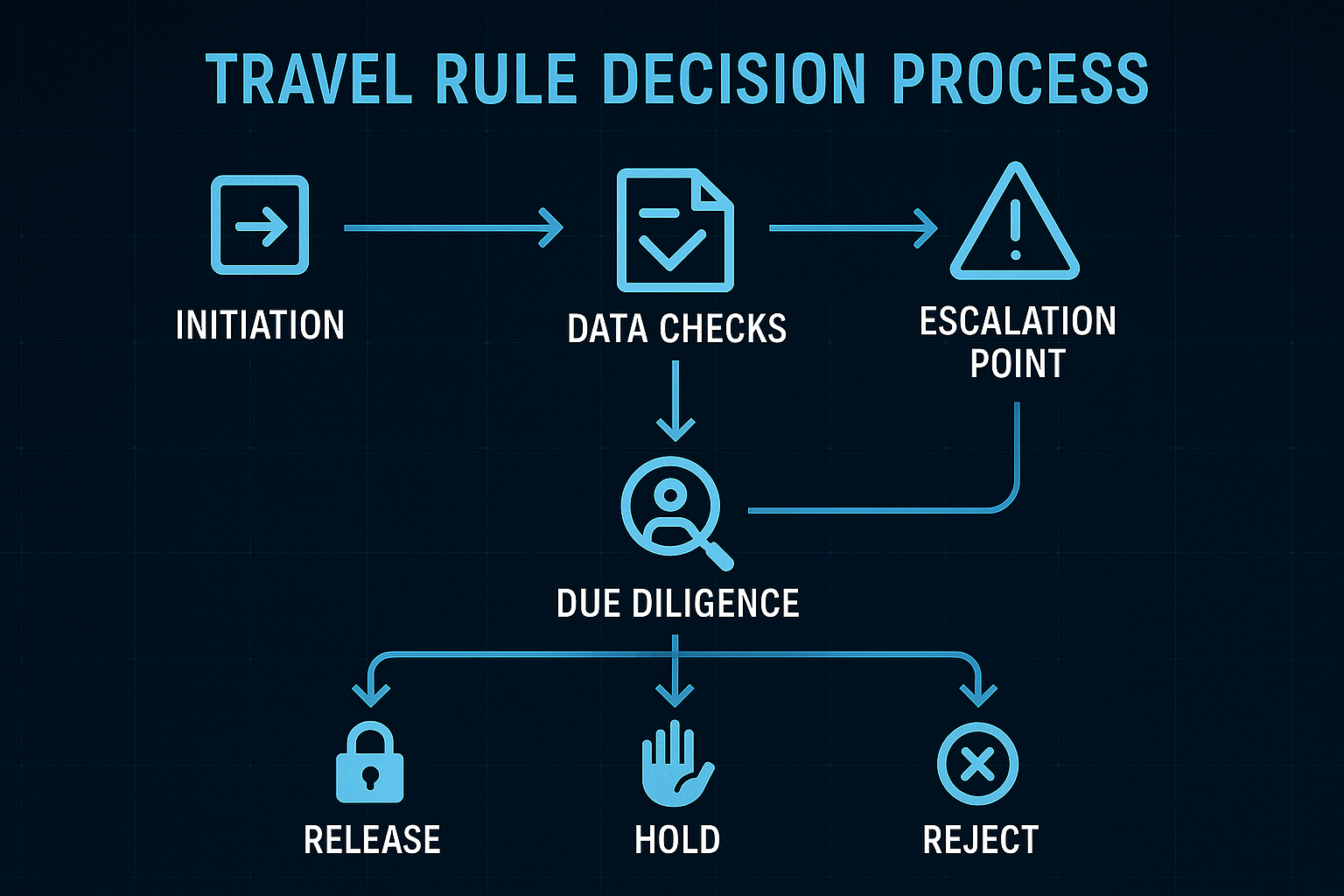
The Travel Rule: get the data or don’t move the coins The Travel Rule is a core FATF AML/CTF requirement adopted in Hong Kong through the AMLO framework and the SFC/HKMA AML guidelines. For virtual asset transfers at or above the FATF threshold (commonly USD/EUR 1,000 equivalent), VASPs must:
- Collect and transmit originator and beneficiary information alongside the transfer.
- Screen counterparty VASPs for sanctions and completeness of data.
- Take risk‑based measures when data is missing or counterparties are unresponsive, including pausing or rejecting transfers.
- Maintain records and make them available to authorities promptly.
A frequently asked question in the stablecoin context is whether institutions not acting as the ordering or beneficiary VASP must comply. Regulators have underscored the Travel Rule’s centrality: if you’re in the transfer chain, you need procedures to obtain, transmit, or remediate required information consistent with your role and risk exposure.
What to do this quarter
- Map roles and owners: Identify all “relevant individuals,” substantial shareholders, and outsourced functions tied to trading or custody. Run and document fit‑and‑proper checks now; don’t wait for an SFC query.
- Prove Travel Rule operability: Demonstrate end‑to‑end message exchange with at least two TRPs (e.g., IVMS‑compliant providers), including fallback to secure channels when counterparties are not integrated.
- Write the refusal playbook: Define when to pause, reject, or report transfers with missing data, and who decides within what SLA.
- Test and evidence: Execute sample transfers, capture evidence packs (screenshots, logs, exception handling), and include them in your licence submission pack.
Common pitfalls we see
- “Policy but no proof”: A 30‑page AML policy without execution evidence is a red flag.
- Ignoring substantial shareholders: Lack of documentation for upstream owners delays approvals.
- Travel Rule gaps with retail flows: Transfers to/from unhosted wallets need extra due diligence; ignoring this triggers follow‑ups.
Final word Fit‑and‑proper is the gate. The Travel Rule is the gatekeeper. Treat both as living controls, not one‑off licence artifacts. If you want a second set of eyes on your readiness, StanCOMP has helped VATPs, OTC desks, and custodians pass these checks with minimal rework—because the best submission is one the SFC doesn’t have to question.