
Hong Kong OTC Compliance: ESG Virtual Asset Tokens

Hong Kong OTC Compliance: ESG Virtual Asset Tokens
If you run an OTC desk in Hong Kong and your clients are asking for “green” or “impact” tokens, you’re not alone. ESG-linked digital assets are moving from pilot to product. But the compliance rails are tightening — fast.
What changed in 2024–2025
- Policy language: The Government’s Policy Statement 2.0 adopts “Digital Assets” (not “Virtual Assets”) and highlights pilots like green bond tokenisation to support a trusted, sustainable market — literally a push to “LEAP.”
- OTC perimeter: The FSTB’s 2024 consultation proposed bringing VA OTC trading into a licensing regime, noting most OTC activity is fiat-to-VA, not VA-to-VA. Expect scope, conduct, and token eligibility limits once enacted.
- Custody uplift: A parallel consultation proposes a licensing regime for virtual asset custodians, aligning with global expectations on safekeeping, segregation, and operational resilience.
- Retail and funds: The SFC updated its approaches to SFC-authorised funds with VA exposure (7 April 2025), reinforcing suitability, disclosure, and custody standards for retail touchpoints.
- Stablecoin wallets: Authorities have flagged that FI/VASP-provided custodial wallets for stablecoin users must implement extra controls around unhosted wallets.
Useful references: SFC virtual asset-related products, HKMA stablecoin policy page, and FSTB public consultations (OTC and custodians).
ESG token structures that actually work for OTC
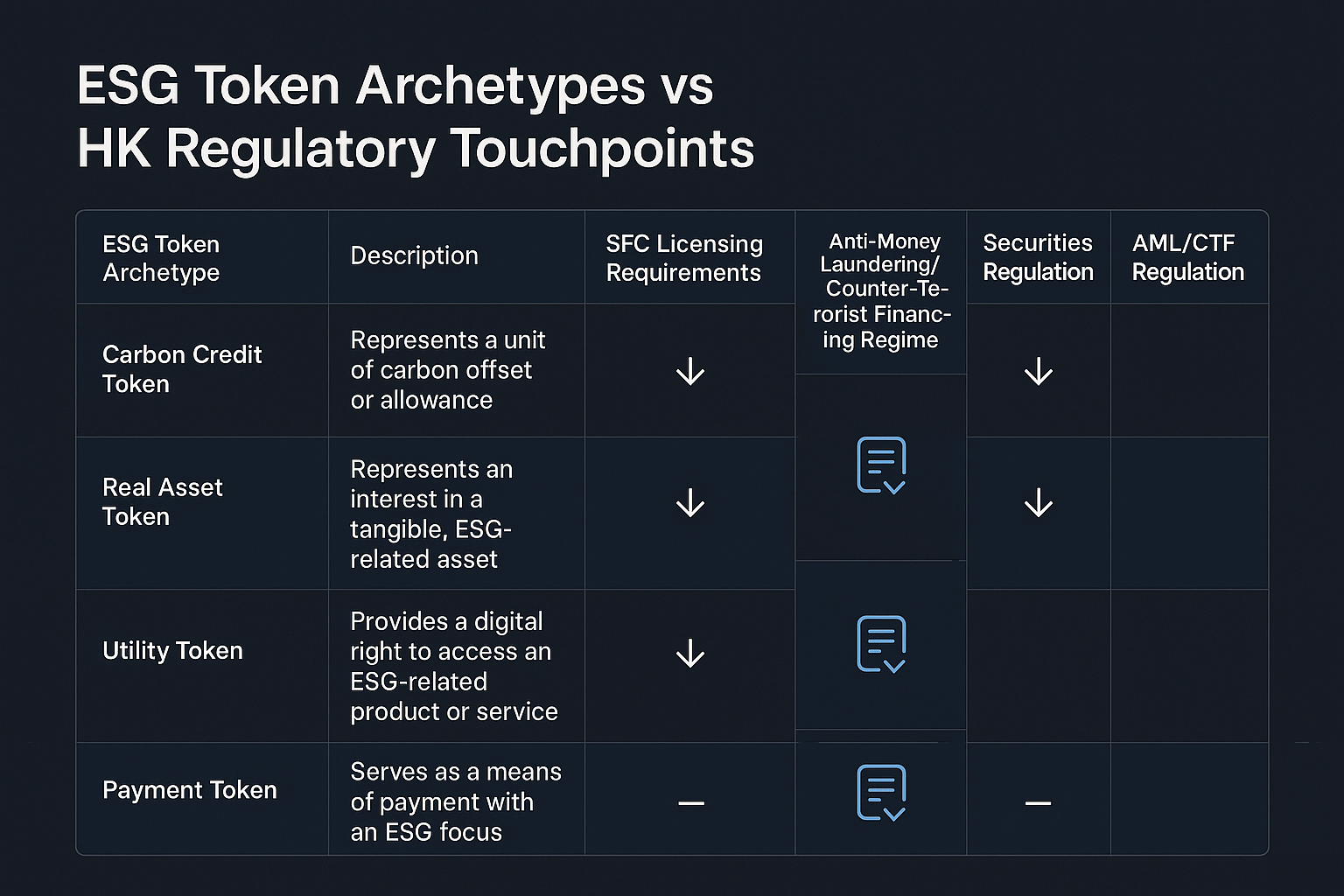
The compliance lens is simple: classification drives everything — licensing, disclosure, custody, and who you can sell to.
-
Green bond token
- What it is: A tokenised fixed-income instrument with use-of-proceeds for green projects.
- Likely classification: Security; may be a collective investment scheme depending on structure.
- OTC viability: Generally not suitable for VA OTC shops focused on non-security tokens; distribution should sit with SFO-licensed intermediaries.
- Key controls: Prospectus/authorisation or exemption, ISAE 3000/3400-style impact reporting, qualified custodian for token and documents.
-
Carbon credit token
- What it is: Token representing verified carbon units (VCM) or claims.
- Likely classification: Depends on rights; may be a VA or a security if profit rights/management are embedded.
- OTC viability: If non-security VA and within OTC scope, possible; otherwise, move to SFO channel.
- Key controls: Registry linkage, burn/retirement mechanics, anti-greenwashing substantiation, travel rule/KYC for off-chain redemption.
-
Impact project/revenue token
- What it is: Token with revenue share tied to an environmental project.
- Likely classification: Often a security/CIS.
- OTC viability: Low for VA OTC shops; handle via licensed broker with proper disclosures.
- Key controls: Offer document, valuation methodology, audited impact metrics, suitability for retail vs PI-only.
Operational rules of the road for OTC desks
- Token list discipline: Under the proposed OTC regime, expect permissioning for tokens and a focus on fiat-to-VA flows. Maintain an eligibility matrix that evidences non-security status, market cap/liquidity tests, and chain analytics clearance. Update quarterly at minimum.
- Custody segregation: Until the new custodian regime takes effect, use reputable, audited custody with clear trust/segregation terms. Prepare to migrate to a licensed VA custodian once the law is in force.
- Stablecoin handling: If facilitating stablecoin purchases, ensure custodial wallet onboarding complies with enhanced controls for unhosted wallets — e.g., address verification, purpose-of-use checks, and risk-based transfer limits.
- Marketing hygiene: ESG claims must be specific. Tie every “green” statement to verifiable frameworks (e.g., ICMA Green Bond Principles, VCM registry IDs). Avoid implied return-plus-impact promises to retail.
- Reporting cadence: Publish quarterly token list rationale, with incident logs (e.g., chain forks, protocol changes). A 1-page impact factsheet per ESG token goes a long way.
What to build now (next 60–90 days)
- Map your catalogue: Classify each ESG token; split “security-like” versus “non-security VA.” Move the former to an SFO-licensed channel partner.
- Draft OTC policies for ESG tokens: eligibility, custody, disclosures, incident response, greenwashing checks.
- Wallet controls: Implement allow-listing and counterparty due diligence for redemptions and retirements (especially for carbon tokens).
- Prepare for licensing: Gap-assess your AML/CFT, travel rule, recordkeeping, and complaints processes against the expected OTC rulebook; run a mock inspection.
- Set impact verification: Lock in an external verifier and publish a short methodology note clients can actually read.
One visual to align your team
Bottom line
ESG tokens can be sold compliantly in Hong Kong — but only if you respect the channel. Keep security-like products out of OTC, tighten custody and wallet controls, and make ESG claims you can defend. Do this, and you’ll stay on the right side of both regulators and your clients.


