HK VASP & RWA Compliance: 2025 Guidance by StanCOMP

HK VASP & RWA Compliance: what changed and what to do now (2025)
Hong Kong’s virtual asset (VA) playbook is no longer experimental. It’s moving toward full-stack regulation: trading, OTC dealing, custody, and tokenization. If you operate a VATP, OTC desk, RWA tokenization platform, or custodian-in-waiting, 2025 is the year you harden your controls and align with incoming regimes.
One line that matters: VASPs are expected to meet the same AML/CFT standards as financial institutions and DNFBPs under FATF Recommendation 15.
The 2025 map: licensing and proposals to watch
| Activity | Regime/Status | Core expectations |
|---|---|---|
| Virtual asset trading platforms (retail-accessible or professional-only) | SFC VASP regime under AMLO – active | Fit-and-proper, robust market surveillance, Travel Rule, token admission governance, custody segregation, ongoing reporting |
| VA OTC dealing (face-to-face or online) | FSTB proposal – consultation concluded; bill expected in 2025 | Requirements will mirror VATP and MSO regimes, including appointment of a competent Compliance Officer and MLRO, KYC, Travel Rule for VA transfers, suspicious transaction reporting |
| VA custodians | FSTB consultation on a new licensing regime – bill expected | Licensing or registration, client asset segregation, tech/cyber standards, reconciliations, audits, insurance/assurance expectations |
| Tokenized RWAs (securities) | SFC guidance applies; tokenized “securities” are securities | Intermediary licensing still required; prospectus/Type 1-6 rules apply; custody and transfer controls must be fit for securities |
References: FSTB’s consultations on OTC VA dealers and on VA custodians; SFC framework for VATPs and tokenized securities; FATF Rec. 15 requiring full AML/CFT obligations for VASPs.
OTC dealers: prepare as if licensed already
Government proposals explicitly draw on both the VATP and MSO regimes, recognising OTC desks straddle VA and money services. Expect to be required to:
- Appoint a competent Compliance Officer and an MLRO, with board-level reporting.
- Run full KYC and ongoing monitoring, not just one-off ID checks.
- Apply the FATF Travel Rule for VA transfers at or above the US$1,000/EUR1,000 (locally, HK$8,000) threshold, including secure transmission of originator/beneficiary data.
- Maintain transaction records, implement sanctions screening, and file STRs to JFIU.
Practical step: if you’re an MSO today, extend your wire-transfer procedures to VA transfers; align thresholds, originator/beneficiary data fields, and exception handling.
Custodians: build for segregation, resilience, and evidence
The custodian consultation is clear: VASPs should face the “full range of AML/CFT obligations” and be subject to prudential-style safeguards. That means:
- Legal segregation of client assets and on-chain wallet segregation policies (dedicated deposit addresses, firm-operated omnibus with deterministic sub-accounting, or both).
- Cold/warm operational standards with role-based approvals and strong key management (HSM/MPC), plus dual control for movements.
- Daily reconciliations across on-chain, wallet, and ledger; independent assurance (e.g., SOC 2 Type II) and incident playbooks for “system failure or security breach.”
- Insurance or alternative risk transfer for private key compromise and crime, where available.
RWA tokenization: it’s still securities law first
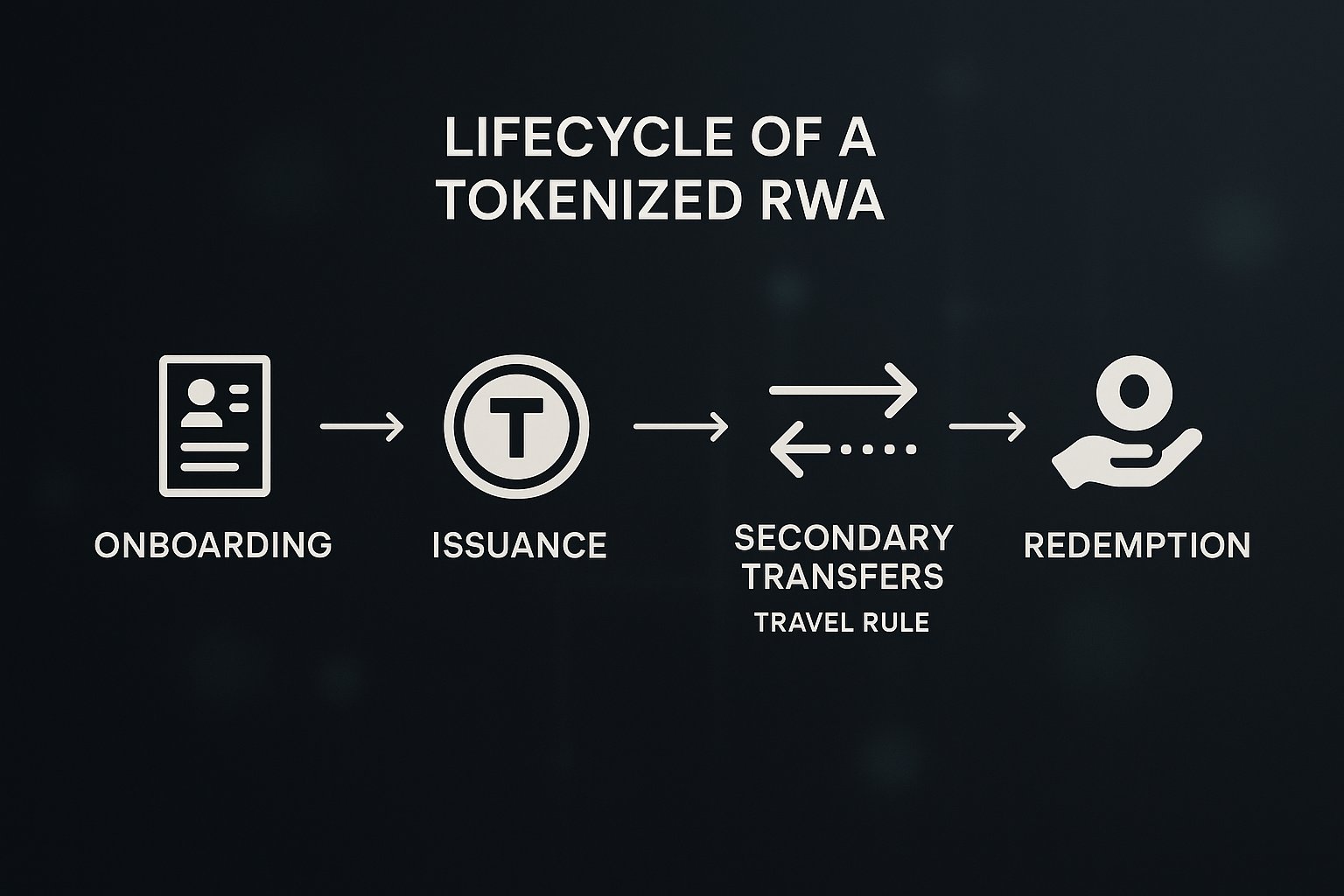
If the token represents equity, debt, or a fund interest, it’s a “security.” Tokenization doesn’t remove prospectus or intermediary licensing obligations. For compliant RWA programs:
- Structure: use professional investor exemptions or SFO-compliant offerings; codify transfer restrictions (whitelists) at the token contract level.
- Distribution: ensure Type 1/4/9-licensed intermediaries handle dealing/advising/asset management.
- Custody: if token custody is outsourced, use providers prepared for the upcoming custodian regime; confirm client asset segregation and audit rights.
- Disclosures: add smart contract, oracle, and off-chain asset risks to offering docs; specify governance for token upgrades and forks.
AML/CFT baselines you should not debate
- Travel Rule: implement interoperable messaging (IVMS 101 payloads) and counterparty VASP due diligence. Maintain a fallback policy for unhosted wallets with enhanced checks.
- Chain analytics: calibrate risk models for mixers, high-risk exchanges, and sanctioned addresses; document tuning and false positive rates. Illustrative target: <3% manual review queue rate with weekly QA.
- Governance: board-approved AML/CFT policy, annual enterprise-wide risk assessment, and training for front-line and tech teams.
What to do this quarter
- Gap assess against VATP/MSO-style requirements; explicitly map OTC workflows to MSO rules and Travel Rule controls.
- Stand up Compliance Officer and MLRO roles if you haven’t. Give them veto power over listings and large OTC blocks.
- For RWA pilots, lock transfer restrictions into the token, not just in a term sheet. Test off-chain/on-chain reconciliation with a T+0/T+1 scenario.
- Prepare for custodian licensing: document wallet architecture, key ceremonies, BCP/DR, and pen-test findings. Commission an external audit timeline now.
Regulation is converging. If you build to the higher bar today, the coming licences become paperwork, not surgery.