
HK Stablecoin Sandbox: IRA & Real-Time Monitoring Guide

HK Stablecoin Sandbox: IRA & Real-Time Monitoring Guide
If you’re entering Hong Kong’s fiat‑referenced stablecoin (FRS) sandbox, your first months shouldn’t obsess over UI. They should lock down the Institutional Risk Assessment (IRA) and an always‑on monitoring stack that HKMA examiners can actually test.
Because in a sandbox, your controls are the product.
Why the sandbox matters now
- Supervisory direction: HKMA’s sandbox gives prospective FRS issuers a venue to demonstrate governance and controls ahead of the formal licensing regime. Expect early, hands‑on feedback on issuance/redemption, reserves, and AML/CFT. See HKMA’s stablecoin materials and policy pathway on its site.
- Custody obligations converge: Under Hong Kong’s proposed virtual asset custodian framework, stablecoin issuers that also custody their own coins will face ongoing HKMA supervision alongside investor protection measures: segregation of client assets, adequate audit, record‑keeping, and the full AML/CFT suite.
- Global risk context: The BIS has flagged stablecoins’ ML/TF and sanctions‑evasion vulnerabilities, and the FATF continues to single out unhosted wallets due to anonymity and mobility. Hong Kong’s consultation conclusions mirror this, stressing that institutions involved in a stablecoin transfer must have essential information for transaction monitoring, sanctions screening, and risk mitigation—including extra safeguards where customers interact with unhosted wallets.
Build the IRA the HKMA way Your IRA should be a living document that examiners can trace to system rules. Keep it short, quant, and mapped to controls.
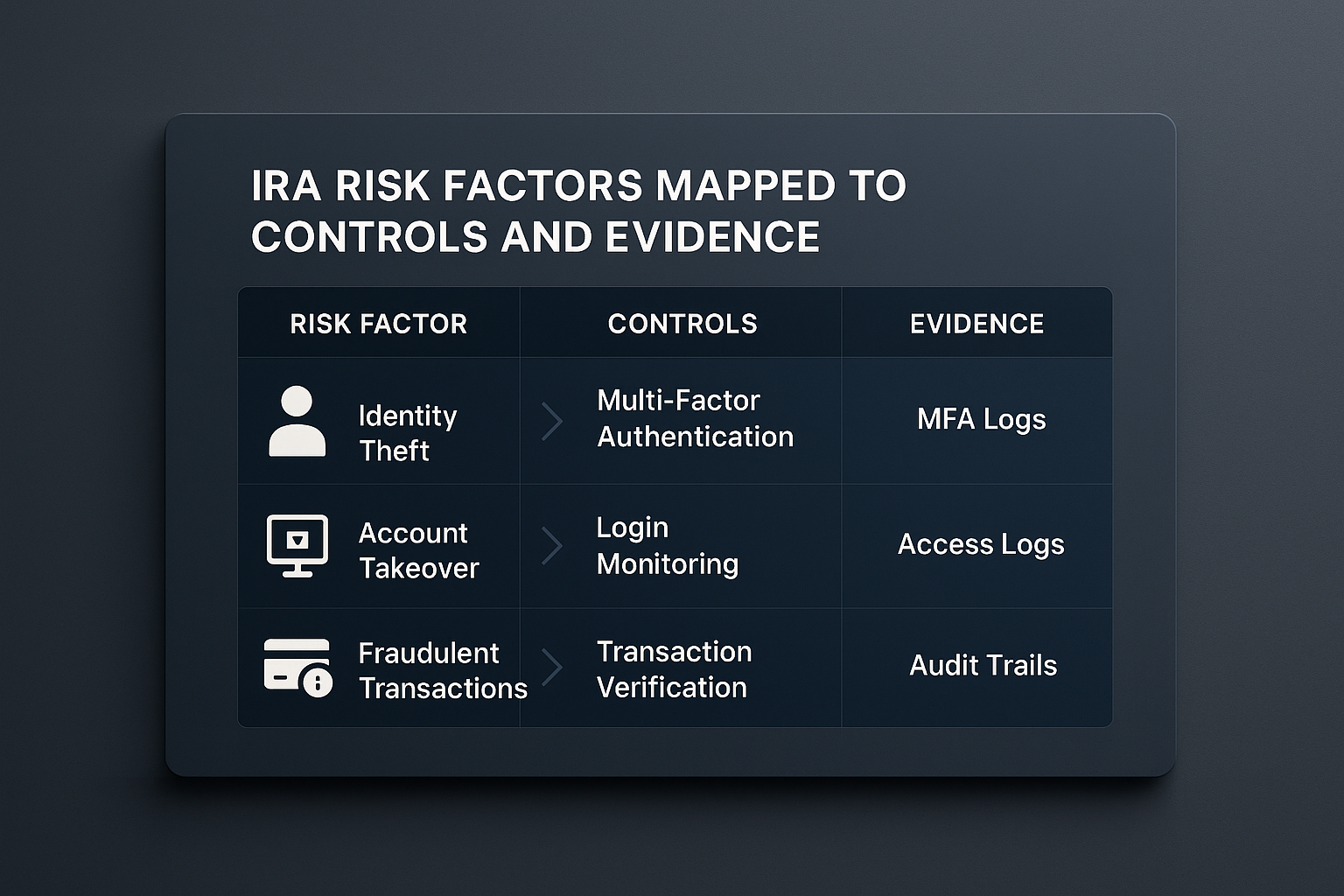
| Domain | What to assess (illustrative) | Control you need | Evidence HKMA will expect |
|---|---|---|---|
| Product/Use case | P2P transfers, merchant payouts, cross‑border | Tiering and purpose‑restriction by product | Parameterized rules, change logs |
| Customer | Retail vs institutional, PEP exposure | Risk‑based KYC with enhanced due diligence (EDD) | KYC records, EDD memos |
| Geography | Sanctioned/grey‑listed links | Geo risk scoring + sanctions/PEP screening | Screening hits, disposition notes |
| Channel | Hosted ↔ unhosted flows | Extra controls for unhosted wallets (limits, proof‑of‑control) | Address attestation, limit tables |
| Protocol | Mint/burn and reserve link | Guaranteed redemption mechanics and monitoring | Reserve attestation, SLA dashboards |
Practical tip: bake numeric thresholds into the IRA (e.g., “cold‑start retail wallets limited to HKD 50,000 equivalent per 24h; hosted→unhosted cumulative cap HKD 200,000 per 7 days unless EDD complete”). Mark these as illustrative if they’re pilots.
Real‑time monitoring: the minimum viable stack The consultation conclusions are clear: parties to a stablecoin transfer must hold essential information for monitoring and screening. For sandbox pilots, stand up:
- Pre‑transaction sanctions screening: screen beneficiary and originator names where known and always screen blockchain addresses. Aim for <1 second API latency.
- Risk scoring on‑chain: cluster analysis, taint, and typologies (mixers, peel chains, sanctioned exchanges). Trigger EDD for privacy‑enhancing tools.
- Event‑driven rules: monitor mints/burns versus reserve changes; velocity spikes; new device + new address + large value; mule patterns.
- Unhosted wallet guardrails: proof‑of‑control (SCA signature or micro‑transfer), lower limits, delayed availability for large cash‑outs, and enhanced travel rule data where feasible.
- Case management with audit trail: every alert needs a disposition, escalation path, and SAR/STR workflow.
For VASP custodial wallets If you’re the FI/VASP providing custody to stablecoin holders, align early with proposed VA custodian expectations:
- Segregation of client assets on‑chain and in books/records; daily reconciliations; independent audit.
- Warm/cold key management with quorum policies; HSM or MPC; disaster recovery drills logged.
- AML/CFT end‑to‑end: KYC, ongoing due diligence, transaction monitoring, sanctions screening, and record retention.
Accounting heads‑up for CFOs According to Bloomberg reporting (via The Block), new SEC staff guidance suggests USD‑pegged stablecoins could qualify as cash equivalents if they carry guaranteed redemption mechanisms. This doesn’t bind Hong Kong accounting, but it’s relevant for dual‑reporting groups. If you claim “cash equivalent,” your redemption SLA, counterparties, and reserve disclosures must be airtight.
What to do in the next 60–90 days
- Finalize IRA v1.0 and map each risk to a specific rule in your monitoring engine.
- Define redemption guarantees: SLA, eligible counterparties, reserve asset mix, and attestation cadence.
- Select vendors: on‑chain analytics, sanctions screening, and travel rule. Pilot with latency and hit‑rate targets.
- Implement unhosted wallet controls and document exceptions.
- Build an examiner‑ready evidence pack: policies, rule library, alert samples, disposition notes, reserve reconciliation, and board reporting.
One last point: if it isn’t logged, it didn’t happen.
References and further reading
- HKMA policy materials on virtual assets and stablecoins: https://www.hkma.gov.hk
- Public consultation on regulating VA custodian services (investor protection, segregation, audit, AML/CFT): https://www.fstb.gov.hk
- FATF Guidance for a Risk‑Based Approach to VAs/VASPs (unhosted wallet risk): https://www.fatf-gafi.org
- BIS commentary on stablecoin vulnerabilities: https://www.bis.org
- SEC staff guidance update on stablecoin accounting (Bloomberg via The Block): https://www.theblock.co/post/312391/sec-updates-staff-guidance-on-accounting-rules-for-usd-stablecoins


