
HK SFC & HKMA: Wholesale Stablecoins and DeFi Compliance

Hong Kong’s regulators are carving out clear, interoperable lanes for stablecoins, tokenised funds, and DeFi-style market plumbing. For founders and institutions looking at “wholesale stablecoins” (institutional-only, permissioned use) and on-chain liquidity, the key is knowing where the SFC ends and the HKMA begins — and how the upcoming OTC and custody regimes tie it all together.
What’s changing — and why it matters
- HKMA is building a licensing regime for stablecoin issuers, supported by a sandbox. The HKMA has noted that distributors may use third‑party custodians to hold stablecoins — a practical nod to market structure where issuers, distributors, and custodians are distinct.
- SFC remains the lead for licensing digital asset dealing and custody service providers under the Government’s Policy Statement 2.0, targeting institutional liquidity, block trading, and safekeeping.
- On OTC, the Government’s consultation proposes that licensed VA OTC operators may only offer tokens that are (i) accessible to retail on at least one SFC‑licensed VATP and (ii) stablecoins issued by HKMA‑licensed issuers once that regime starts. As of end‑January 2024, SFC‑licensed VATPs support retail trading in Bitcoin and Ether.
In other words, the “allowed universe” for retail OTC will likely narrow to SFC‑vetted tokens and HKMA‑licensed stablecoins. Wholesale use cases can go deeper — but only with the right permissions.
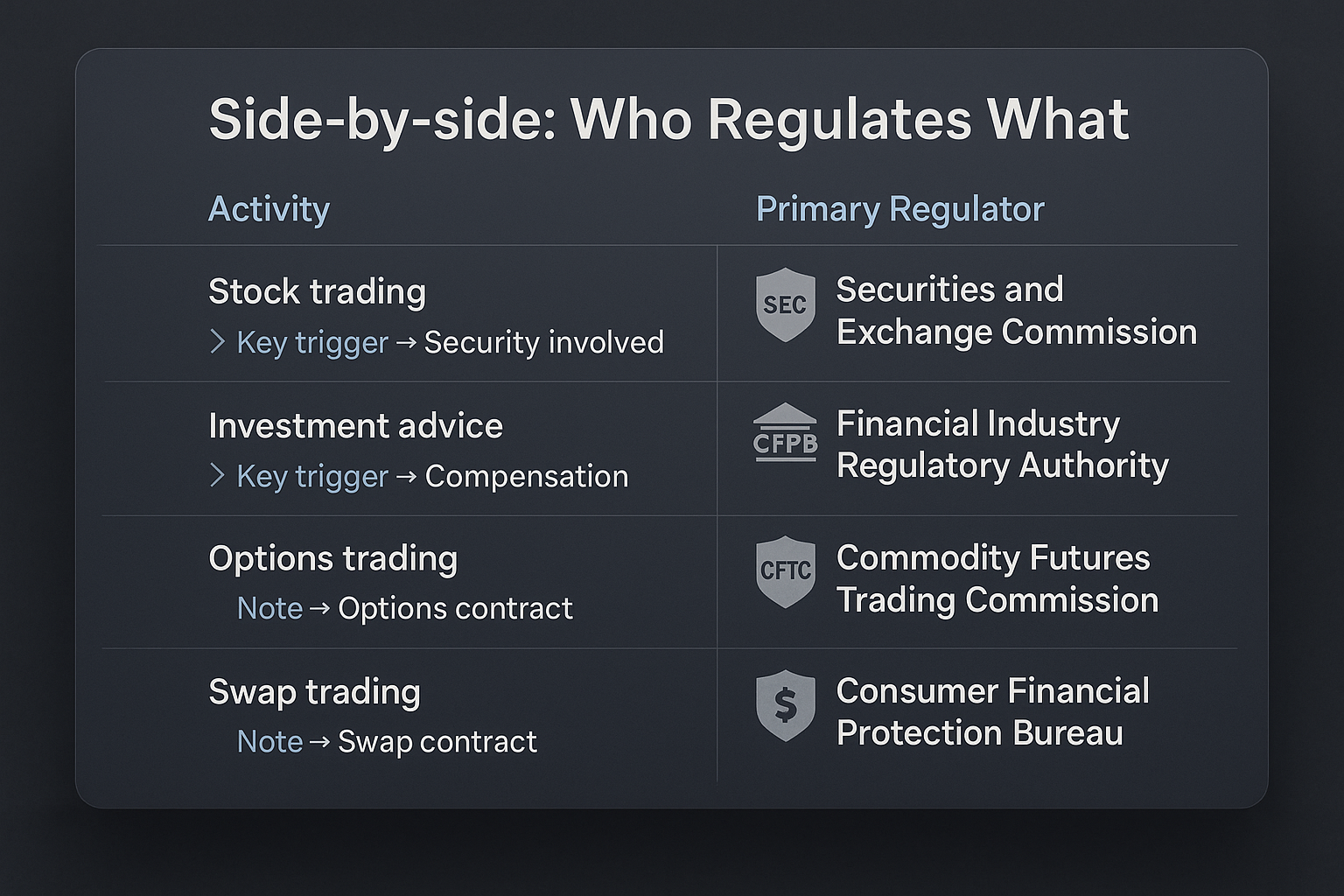
- Activity: Issue fiat‑referenced stablecoin (wholesale)
- Primary regulator: HKMA
- Key trigger: Issuing/redemption to Hong Kong persons; reserve, governance, AML/CFT obligations
- Notes: Distribution may involve third‑party custodians per HKMA sandbox feedback
- Activity: Deal in/safekeep digital assets (incl. stablecoins) for clients
- Primary regulator: SFC (proposed DA dealing/custody regimes)
- Key trigger: Holding client assets, executing block trades, sourcing liquidity for Hong Kong clients
- Notes: Expect robust client asset segregation and on‑chain wallet controls
- Activity: Operate a VA trading platform
- Primary regulator: SFC (VATP regime)
- Key trigger: Operating an exchange accessible by Hong Kong investors
- Notes: Retail access currently limited to BTC/ETH on licensed VATPs
- Activity: VA OTC (face‑to‑face or online)
- Primary regulator: SFC (proposed licensing)
- Key trigger: OTC dealing in/selling VAs in Hong Kong
- Notes: Token eligibility constrained to VATP‑listed tokens and, later, HKMA‑licensed stablecoins
Designing a compliant wholesale stablecoin
- Perimeter: Position the stablecoin for institutional settlement and liquidity (e.g., fund subscriptions, collateral mobility) with onboarding restricted to professional investors.
- Reserves and redemption: High‑quality, short‑dated fiat assets; daily reconciliation; independent attestation. Redemption SLAs (e.g., T+0 for same‑bank, T+1 cross‑bank) should be explicit.
- Distribution and custody: If using distributors, document who holds the coins. HKMA is aware distributors may appoint separate custodians; map those chains clearly.
- On‑chain controls: Whitelisting, transfer gating, and address‑based velocity limits to evidence “wholesale only.”
- Interop with markets: Build for permissioned DeFi rails used by asset managers under Project Ensemble pilots (e.g., tokenised MMFs/funds, RWA income streams). Keep the stablecoin composable but gated.
DeFi compliance: when SFC comes into play
- If you run or market an automated protocol that matches orders or provides a trading venue to Hong Kong investors, you risk falling into “automated trading services” territory — expect SFC engagement and potentially VATP/Type 7‑style obligations.
- A safer pattern for settlement pools: permissioned AMMs/RFQ pools restricted to professional investors, no retail UI, clear operator accountability, and transaction monitoring. If fees are charged and Hong Kong investors are targeted, speak to the SFC early.
OTC liquidity implications
- Retail OTC desks will be limited to SFC‑vetted tokens and HKMA‑licensed stablecoins once rules kick in. Don’t assume a USD stablecoin is “OK” for retail until the issuer is licensed.
- Institutional OTC under the forthcoming SFC dealing regime can support block liquidity for wholesale stablecoins, but expect travel rule, source‑of‑funds, and counterparty screening aligned to AMLO.
What to do now (practical sequence)
- Choose your lane: issuer (HKMA) vs dealer/custodian (SFC) vs both via affiliates.
- Enter the HKMA sandbox if you plan to issue; align distribution/custody chains upfront.
- Build a token eligibility policy tied to the OTC consultation and SFC VATP lists.
- Implement permissioned DeFi controls: KYC‑gated smart contracts, oracle/upgrade governance, incident kill‑switch.
- Pre‑clear with regulators; don’t surprise them with retail exposure.
One final point: wholesale doesn’t mean light‑touch. It means targeted, auditable, and permissioned.
References and useful links
- SFC Licensed VATPs: https://www.sfc.hk/en/Regulatory-functions/Intermediaries/Licensing/Virtual-asset-trading-platforms/Lists-of-licensed-VATPs
- HKMA Project Ensemble: https://www.hkma.gov.hk/eng/key-functions/financial-infrastructure/project-ensemble/
- HKMA digital assets and stablecoins resources: https://www.hkma.gov.hk/eng/key-functions/banking-stability/digital-assets-and-stablecoins/
- Government consultation on VA OTC regulation (press release): https://www.info.gov.hk/gia/general/202402/08/P2024020800412.htm


