HK RWA Compliance: Onboarding Risk Matrix & e-HKD

HK RWA Compliance: Onboarding Risk Matrix & e-HKD
Hong Kong has moved from pilots to plumbing. With Policy Statement 2.0 signalling a formal framework review for tokenisation (starting with bonds but explicitly informing other RWAs), and the HKMA’s Project Ensemble plus e-HKD pilots pushing settlement innovation, the question most founders ask us is simple: how do we onboard clients and wallets without tripping AML or settlement risk?
Short answer: use a risk matrix tied to wallet provenance, asset type, and settlement rails. Then wire it to Travel Rule proof and e-HKD/tokenised deposit flows.
Why this matters now
- Tokenised bonds are already operational, and the review will shape other RWAs and fund products (per Policy Statement 2.0 and Project Ensemble).
- The Government is also nudging tokenisation for LME-registered metals stored in Hong Kong to act as a global inventory identifier, improving traceability and financing.
- On AML for stablecoins, the HKMA acknowledges that classifying custodial vs unhosted wallets remains difficult and is engaging via the FATF Virtual Asset Contact Group, referencing the FATF’s Best Practices on Travel Rule Supervision. Translation: regulators want stronger controls, but they know the tooling isn’t perfect yet.
A practical onboarding risk matrix (illustrative) Use a points-based matrix to set KYC/EDD depth, wallet controls, and settlement options. Scores below are illustrative only.
| Dimension | Low Risk (0–2) | Medium (3–5) | High (6–9) | Typical Controls |
|---|---|---|---|---|
| Customer type | HK/SFC- or HKMA-licensed FI | Foreign regulated FI/custodian | Unregulated corporate/individual | KYC tiering, UBO checks |
| Wallet host | HK-licensed VASP or bank custodian | FATF member VASP with Travel Rule attestations | Unhosted/self-custody or VASP in higher-risk jurisdiction | VASP attestation, proof-of-control, enhanced monitoring |
| Asset/RWA | SFC-authorised tokenised bond/MMF | Tokenised revenue streams | Commodity receipts, private credit, real estate SPVs | Product risk disclosures, valuation/CF controls |
| Jurisdiction | HK, low-risk FATF | Mixed | Sanctions/high-risk | Screening, legal opinions |
| Transaction pattern | Predictable, <HKD 5m/month | Growing, 5–20m | Spiky/peer-mix, >20m | Limits, manual review |
| Travel Rule readiness | Full TR messaging + beneficiary VASP verification | Partial | None | Message interoperability, rejects/holds |
Policy triggers
- Score ≤6: Standard KYC, allow e-HKD/tokenised deposit settlement.
- Score 7–12: EDD, require hosted wallet or Travel Rule-compliant VASP; limit unhosted flows.
- Score >12: Senior sign-off, restrict unhosted wallet funding; prefer fiat/e-HKD via regulated intermediaries.
Wallet classification: face the reality The HKMA has noted the tech gap in reliably classifying custodial vs unhosted wallets. Don’t pretend it’s solved. Do this instead:
- Perform proof-of-control for self-custody (micro-signing, return transactions).
- Require counterparty VASP attestations and exchange TR messages when possible (e.g., TRISA/TRUST/OpenVASP).
- Use multiple analytics providers and set false-positive dispute workflows.
- Re-score wallets dynamically based on on-chain behaviour and sanctions updates.
Reference: FATF Travel Rule materials.
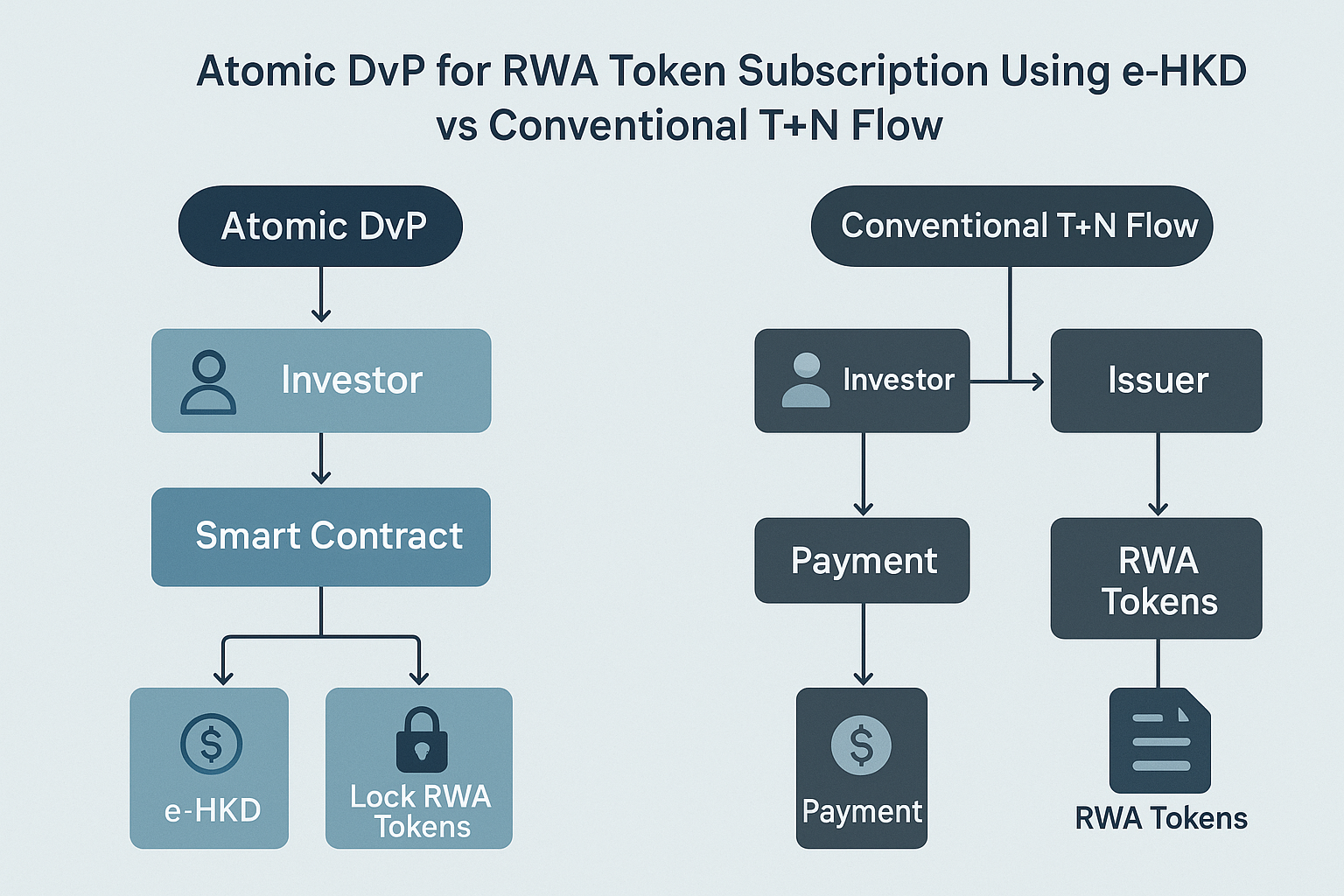
e-HKD and Project Ensemble: the settlement edge Use e-HKD (or bank-issued tokenised deposits under Project Ensemble) to close delivery-vs-payment (DvP) risk for RWA subscriptions, coupons, and redemptions:
- Smart contracts can lock RWA tokens until e-HKD is received in the same atomic transaction.
- For funds, SFC-supervised participation under Ensemble enables tokenised MMFs and other vehicles to distribute income programmatically.
- For metals, pair tokenised warehouse receipts with e-HKD settlement to tie inventory identifiers to paid-for ownership, improving audit trails for LME-brand stock stored in HK.
What to do this quarter
- Build the matrix into onboarding and require a wallet-type declaration, with automated proof-of-control for self-custody.
- Implement Travel Rule messaging and counterparty VASP verification; log rejections and near-misses.
- Add e-HKD/tokenised deposit rails for institutional clients first; pilot atomic DvP for a low-risk product (e.g., tokenised MMF units).
- For commodities, integrate warehouse attestations so each token maps to a unique global inventory identifier.
Final thought Hong Kong is giving you the rails and the policy air-cover. Pair a transparent risk matrix with e-HKD settlement, and most of the hard problems—wallet ambiguity, DvP gaps, and auditability—become manageable.
Useful links
- HKMA e-HKD: https://www.hkma.gov.hk/eng/key-functions/digital-economy/e-hkd/
- Project Ensemble: https://www.hkma.gov.hk/eng/key-functions/monetary-stability/financial-infrastructure/project-ensemble/
- SFC virtual assets materials: https://www.sfc.hk/
- FATF virtual assets: https://www.fatf-gafi.org/en/topics/virtual-assets.html
- LME warehousing (reference): https://www.lme.com/