
HK Compliance: Travel Rule, RWA & PSO Updates 2025

Introduction
Hong Kong’s digital asset rulebook keeps maturing. For 2025, three items should be on every founder’s radar: the Travel Rule, tokenized real‑world assets (RWA), and payment oversight under the Payment Systems and Stored Value Facilities Ordinance (Cap. 584), often still called “PSO”. Here’s what’s actually changed, what hasn’t, and what you should do next.
Travel Rule: what HK expects now
Hong Kong’s Anti-Money Laundering and Counter-Terrorist Financing (Amendment) Ordinance 2022 put virtual asset trading platforms (VATPs) on a licensing footing aligned with FATF standards. The Travel Rule sits at the core of that regime. Consultation conclusions on stablecoins reiterated three things:
- It’s a FATF requirement and applies across the value chain in VA/stablecoin transfers.
- Obligations differ by role: ordering, intermediary, beneficiary.
- HKMA acknowledges the “sunrise issue” (inconsistent global rollout, lack of interoperable standards, and unhosted wallets), and points licensees to paragraphs 6.25–6.42 of the AML/CFT Guideline for how to handle practical challenges.
Useful reading:
- AMLO (Cap. 615) – AML/CFT framework for VATPs: https://www.elegislation.gov.hk/hk/cap615
- HKMA AML/CFT Guideline (AIs; see para. 6.25–6.42): https://www.hkma.gov.hk/eng/key-functions/banking-stability/aml-cft/guideline/
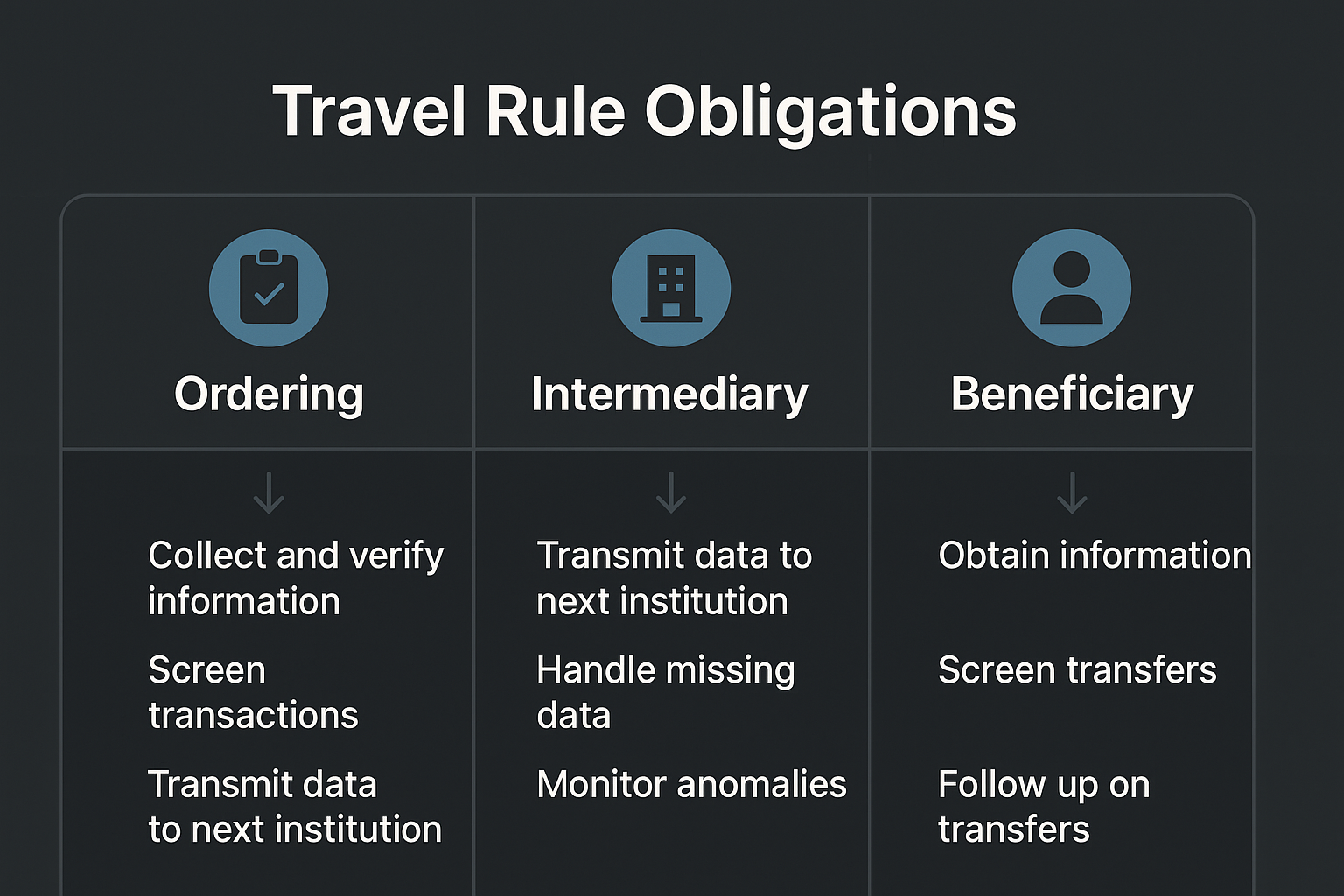
Practical playbook for 2025:
- Messaging: Use IVMS101-compliant payloads and support at least two network rails (e.g., TRISA plus an API-based vendor) to reduce counterparty drop-off. Target >90% automated match rates; document manual fallback for the rest.
- Unhosted wallets: Apply risk-based controls—enhanced due diligence on first-time withdrawals, SOW/SOF refresh ≥USD 1,000 equivalent, and on-chain analytics. If data can’t be collected, consider restricted corridors or reject.
- Non-compliant counterparties: Follow the AML/CFT Guideline’s exception handling—hold, request data within a defined SLA (e.g., T+1), and report if red flags persist.
RWA in Hong Kong: tokenization is not a regulatory shortcut
Tokenizing an asset doesn’t change its legal character. If the underlying is a security, SFO applies. If it’s a collective investment scheme, expect Type 1/4/9 licensing touchpoints. On the AML side, once your token is a “virtual asset” for transfer purposes, the Travel Rule can be triggered when moving it on-chain—even if the token represents equity, real estate, or invoices.
What to get right before you mint:
- Offer/marketing: Check exemptions under the Companies (WUMP) Ordinance and SFO prospectus/CIS requirements before retail distribution.
- Custody: Hong Kong has consulted on a dedicated regime for virtual asset custodian services as part of its “second policy statement” roadmap. If you’re outsourcing custody, confirm the provider’s Hong Kong licensing posture and segregation model; expect incoming rules to formalize these standards.
- Secondary trading: Listing RWA tokens on a VATP brings the AMLO VATP regime squarely into scope (onboarding, Travel Rule, market surveillance).
PSO (Cap. 584) watchlist: payments meet stablecoins
For payments businesses, PSO/PSSVFO oversight continues to cover designated systems and stored value facilities. In parallel, stablecoin policy is converging with payments oversight. Recent consultation conclusions make clear that:
- The Travel Rule will apply in stablecoin transfers based on your role (ordering/intermediary/beneficiary);
- Institutions should use the AML/CFT Guideline’s flexibility to navigate cross-border “sunrise” gaps.
Action items if you touch stablecoins or tokenized deposits:
- Map flows: identify when you are ordering vs. intermediary vs. beneficiary. Build control tests for each.
- Data portability: ensure required originator/beneficiary fields travel with the token transfer; maintain auditable logs for ≥6 years.
- Incident runbook: define reject/return procedures for incomplete data and a reporting path for STRs.
What to do this quarter
- Gap-assess Travel Rule controls against paras. 6.25–6.42; set a 90-day remediation plan with clear KPIs (match rate, exception aging).
- For RWA pilots, run a two-lens review: securities/offer regime and VA transfer/Travel Rule impact. Don’t wait for custody rules—vendor-diligence now will save you re-papering later.
- Payments teams: align PSO compliance testing with stablecoin flows; treat “sunrise” corridors as elevated risk with tighter thresholds.
The bottom line
Hong Kong’s message is consistent: build to FATF-grade AML and treat tokenization as a change in technology, not a change in law. If you need a sanity check on your Travel Rule implementation or an RWA go‑to‑market review, we’re happy to walk through it with you—before a regulator does.


