
HK Compliance: Smart Contract Audit & Custody Trust

HK Compliance: Smart Contract Audit & Custody Trust
If you’re building in Hong Kong’s virtual asset market, two things now decide whether you’ll pass regulatory muster or stall at onboarding: how your smart contracts are audited, and how your custody is ring‑fenced. The regulatory direction is clear: investor protection through segregation, auditability, and AML/CFT discipline — especially for stablecoins and custodial wallets.
What’s changed (and what hasn’t)
- HKMA expects licensed stablecoin issuers that self‑custody to be under ongoing supervision, including safekeeping, segregation of client assets, and adequate audit and records. See the HKMA/FSTB consultation materials and updates: HKMA virtual assets overview and FSTB virtual assets page.
- AML/CFT is non‑negotiable. Schedule 2 of the Anti‑Money Laundering and Counter‑Terrorist Financing Ordinance (Cap. 615) applies to licensed/registered virtual asset custodians for CDD and record‑keeping. See Cap. 615 Schedule 2.
- For stablecoin transfers, institutions need data sufficient for transaction monitoring, sanctions screening and risk mitigation — and must apply additional controls for unhosted wallets. In practice, that means wallet‑level risk rules, provenance checks, and gated redemption.
In short: if your code moves value or your business holds wallets, you’re in supervised territory.
Smart contract audits that pass in Hong Kong A passable PDF audit isn’t enough. Regulators and bank counterparties look for repeatable control evidence that maps to custody, redemption, and AML risk.
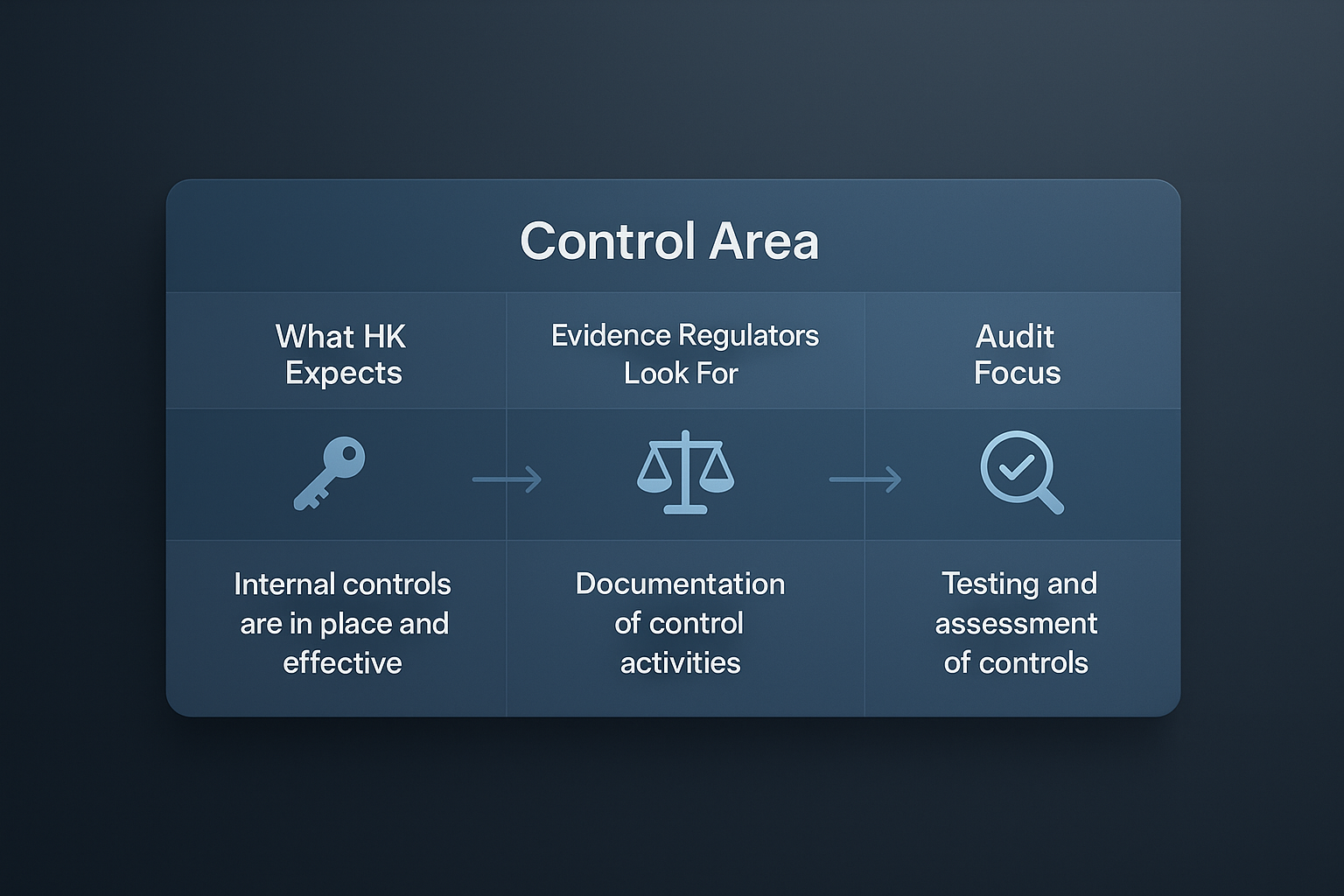
- Contract upgradability and admin keys | Documented key governance; 4‑eyes or multisig; emergency pause with audit trail | Key ceremony records; multisig policies; key rotation logs | Verify access controls; simulate pause/unpause; review timelocks
- Client asset segregation in code | Segregated balances; no rehypothecation unless disclosed | On‑chain mapping showing per‑client or omnibus with sub‑ledger | Inspect state variables; attempt unauthorized transfers in tests
- Stablecoin mint/redeem logic | Redemption at par with KYC’d counterparties; rule‑based gating | Whitelisting/KYC hooks; event logs aligned to off‑chain records | Trace mint/burn events; reconcile with ledger extracts
- Compliance hooks | Sanctions/blacklist integration; transfer restrictions where required | Oracle/registry references; fallback behavior | Test blocked transfers; oracle failure modes
- Monitoring and auditability | Emissions of events; deterministic accounting | Event schemas; indexer dashboards | Check event completeness; replay accounting over sample periods
Two practical tips:
- Make your audit “operational”: include runbooks, not just findings. Banks will ask who can hit pause at 2 a.m.
- Treat test coverage like capital. Target ≥80% critical-path coverage (illustrative), with scenarios for oracle outage, key compromise, and chain reorgs.
Why custody trust arrangements are becoming default Most HK exchanges and custodians now use a custody trust structure to ring‑fence client assets from the operating company’s balance sheet and creditors. Properly implemented, it delivers what the consultation papers keep emphasizing: segregation, audit, and investor protection.
Key elements we implement for clients:
- Trust deed with clear declaration of trust over client VAs; no set‑off or lien by the operator.
- Segregated on‑chain addresses (or tagged omnibus) mirrored by off‑chain sub‑ledgers.
- Dual‑control MPC/HSM policies where the trustee holds at least one key shard or approval step.
- Independent reconciliations: T+0 automated plus T+1 manual exception review, with immutable logs.
- Insolvency opinions confirming client assets are outside the estate, subject to proper trust administration.
Stablecoin‑specific wallet controls
- Custodial wallets: full CDD at onboarding; travel‑rule/transfer data sufficient for monitoring and sanctions screening; periodic refresh per Schedule 2 risk.
- Unhosted wallets: apply additional controls — funding source checks, velocity/amount caps, risk‑based holds, and enhanced review on redemption to fiat.
- Redemption gates: document conditions (e.g., sanctions hits, insufficient KYC) and disclose timelines for remediation and payout.
What to do this quarter
- Map controls to code: Create a traceable matrix from HK expectations to specific contracts, functions, and events.
- Upgrade your audit package: Add key ceremonies, incident runbooks, and change‑management proofs.
- Finalize the trust: Appoint an HK trustee, execute a deed, and operationalize reconciliations and key governance.
- Tighten wallet risk: Deploy screening, provenance scoring, and rules for unhosted interactions.
- Evidence, not promises: Set up dashboards and monthly board packs showing segregation, reconciliations, and AML metrics.
StanCOMP’s StanCompliance team has helped HK operators stand up custody trusts, pass bank due diligence, and harden smart contracts against real attack paths. If you want a gap map against HKMA/FSTB expectations or need a trust deed that auditors will sign off, reach us at stancomp.com.
Because in Hong Kong today, code quality and custody structure are your license to operate.


