
HK Compliance Guide: ESG Tokens, DeFi & Stablecoins (2025)

Hong Kong’s 2025 reality: tokenisation is moving from pilots to production, stablecoins are edging into payments, and DeFi faces “same business, same risk, same rules.” The Government’s Policy Statement 2.0 doubles down on a unified framework, legal streamlining, and regular tokenised Government bond issuance—while actively facilitating stablecoin use cases. That’s an open door for innovation, but only if you build with compliance by design.
ESG tokens: structure them like securities, prove the impact
- What fits today
- Tokenised bonds and deposits with green/SLB features, using on-chain registers and off-chain CSD links. Hong Kong has already executed tokenised green bonds and is moving to regularise issuance, giving issuers a clear playbook.
- RWA tokenisation of sustainability-linked instruments under existing securities laws, referencing the SFC’s tokenised securities guidance to manage smart-contract and record-keeping risk.
- What to watch
- Carbon-credit tokens can stray into “collective investment scheme” territory if proceeds are pooled or returns are managed by others. Treat them as securities unless counsel confirms otherwise.
- ESG claims must tie to auditable metrics. Plug in third-party assurance and on-chain oracles with signed attestations; align asset-level KPIs with HKEX ESG Reporting requirements if you’re a listed group.
- What regulators expect
- Same disclosure, suitability, custody and incident-management standards as traditional products, plus smart-contract governance (change controls, pause mechanisms, and external audits).
- AML/CFT traceability of token flows and counterparties—impact tokens are not exempt.
Stablecoins: payment use cases are in scope; algorithms are out
- Policy direction
- Hong Kong is building a licensing regime for fiat-referenced stablecoins (FRS) with full reserve, segregation, governance and redemption-at-par requirements. The push is to support payment and settlement use cases, not experimentation with unbacked designs.
- Algorithmic stablecoins won’t meet payment-stablecoin standards. If your model relies on trading incentives rather than high-quality, ring-fenced reserves and daily reconciliation, assume it is not licensable for payments.
- AML/CFT and the “information package”
- Expect obligations to transmit payer/payee data sufficient for transaction monitoring, sanctions screening and risk mitigation across stablecoin transfers. In practice: Travel Rule data fields, sanctions list hits, and VASP-to-VASP verification before release of funds.
- Accounting and treasury
- Recent U.S. staff guidance indicates USD-pegged stablecoins with guaranteed redemption could be cash equivalents. Helpful—but Hong Kong reporters under HKFRS/IFRS should not assume the same. Agree a policy with auditors: reserve quality, redemption terms (T+0/T+1), and counterparty risk drive classification.
- Custody and wallets
- If you operate hosted wallets or reputationally intermediate transfers, plan for licensing, segregation of client assets, incident playbooks, and attestation of reserve assets held with qualified custodians.
DeFi: “Decentralised” won’t sidestep Type 7
- If you operate, market, or provide access to an order book, AMM, or routing front-end that serves Hong Kong users, you can trigger ATS (Type 7) or VATP licensing—even if the protocol is on-chain and governance is via a DAO.
- Practical guardrails
- Geofencing and network-level controls; KYC/ongoing monitoring for front-ends; token listing governance tied to market integrity; on/off-ramp Travel Rule compliance.
- Treasury interactions with DeFi protocols require counterparty/rug risk assessments, code audits, and concentration limits approved by your risk committee.
What to do this quarter
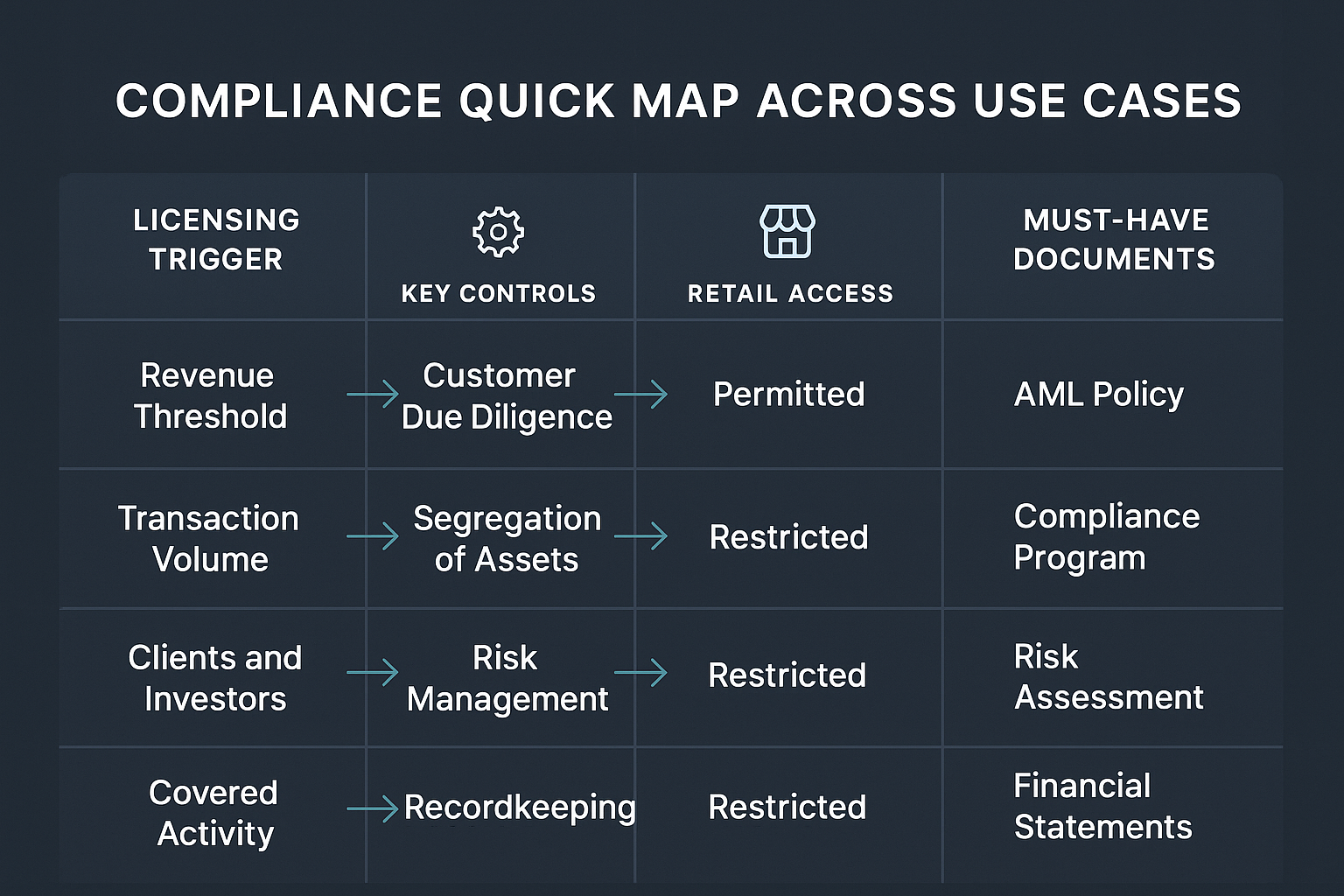
- Map your activity to licences: securities (Type 1/4/9), ATS (Type 7), VATP, or upcoming HKMA stablecoin licences.
- For ESG tokens, align term sheets with SFC tokenised securities expectations, embed KPI verification, and pre-clear disclosures.
- For stablecoins, document your reserve policy, redemption SLAs, and Travel Rule data model; perform a sanctions and wallet-screening dry run.
- For DeFi exposure, implement a protocol whitelist, set on-chain exposure caps, and sign a chain-analytics service.
One misstep can set you back a year. One clean structure can unlock distribution.
Further reading
- SFC virtual asset trading platforms overview: https://www.sfc.hk/en/Rules-and-standards/Other-regulatory-requirements-and-information/VA-trading-platforms
- SFC Statement on Tokenised Securities-Related Activities: https://www.sfc.hk/en/News-and-announcements/Policy-statements-and-announcements/Statement-on-Tokenised-Securities-Related-Activities
- HKSAR Government tokenised green bond issuance (first-in-government): https://www.hkma.gov.hk/eng/news-and-media/press-releases/2023/02/20230216-3/
- SEC staff guidance update on USD stablecoins (via The Block/Bloomberg): https://www.theblock.co/post/309313/sec-updates-staff-guidance-on-accounting-rules-for-usd-stablecoins
If you need a sanity check on structure, licensing path, or data fields for stablecoin transfers, StanCOMP can pressure-test your design before you ship.


