
HK Compliance Guide: CBDC, Tokenization & Custody Standards

HK Compliance Guide: CBDC, Tokenization & Custody Standards
If you’re building in Hong Kong in 2025, three rails define whether your project clears compliance: CBDC connectivity (e‑HKD/mBridge), asset-backed tokenization, and institutional-grade custody. The tech changes fast. The rulebook has not.
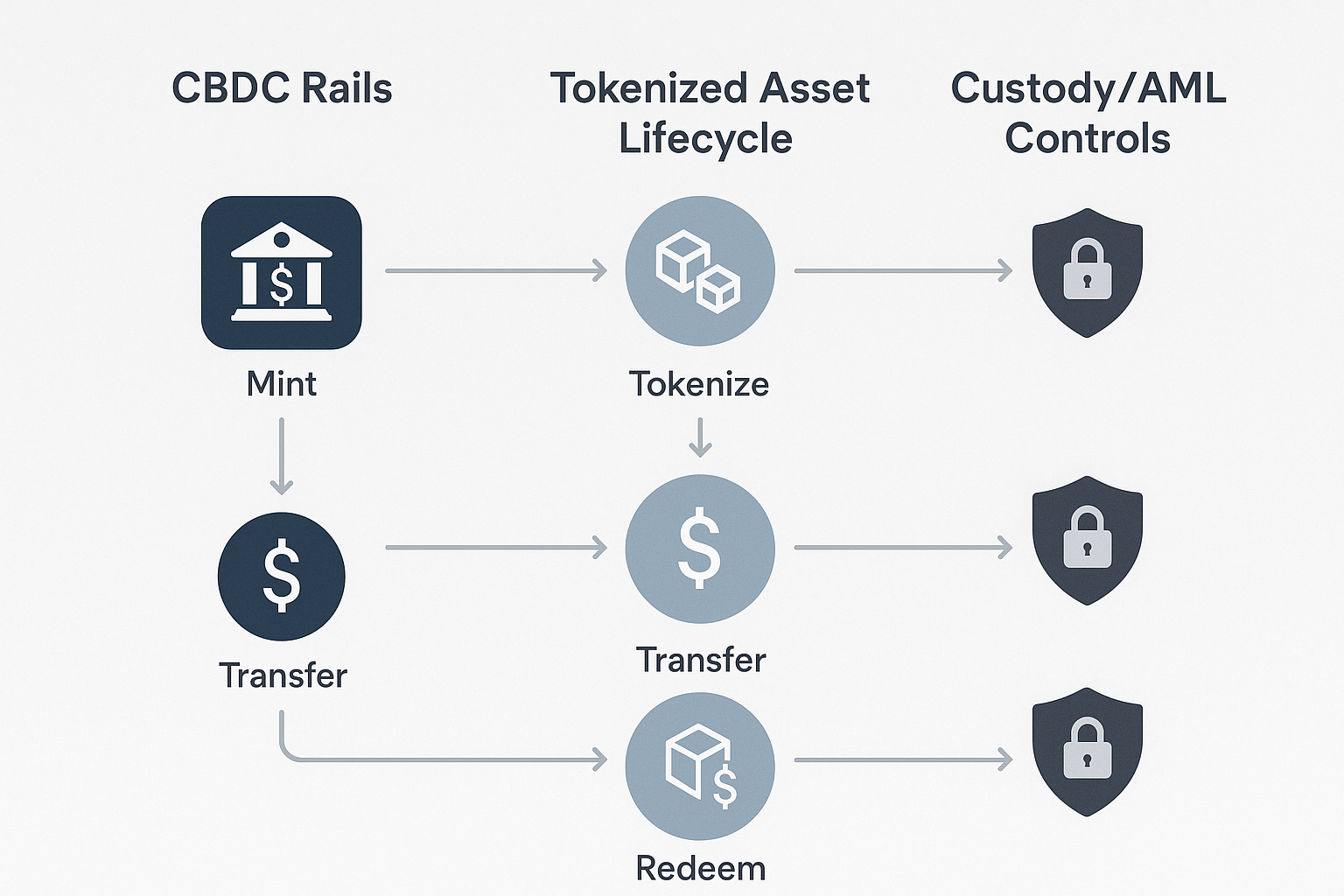
CBDC in Hong Kong: what to plan for now
- Status: The HKMA’s e‑HKD Pilot Programme is ongoing (Phase 2 use cases focus on programmability, tokenized deposits, and offline payments). Cross‑border wholesale settlement is advancing via BIS mBridge with HKMA as a founding participant. See HKMA’s e‑HKD page and BIS mBridge updates for timelines and scope.
- Compliance stance: Treat CBDC pilots as fiat rails with bank‑grade AML/CFT, sanctions screening, and data governance. No “regulatory arbitrage”: Travel Rule does not apply to CBDC, but standard wire‑like recordkeeping does.
- Action points for pilots:
- Embed programmability controls (e.g., spend rules, time locks) in a policy framework approved by your board risk committee.
- Map outsourcing and data residency if using third‑party CBDC nodes or service providers.
- Pre‑agree AML roles with partner banks (KYC owner, screening owner, suspicious transaction reporter).
Useful links: HKMA e‑HKD Pilot; BIS mBridge.
Asset‑backed tokenization: same rights, new plumbing Hong Kong’s position is clear: tokenized securities are still securities. The SFC expects full compliance with existing securities laws plus added tech‑risk controls. See the SFC’s circulars on tokenized securities and intermediaries.
What this means in practice:
- Legal wrapper first: Ensure the token confers enforceable legal rights equivalent to the traditional instrument (ownership, cashflows, voting). If not, expect prudential penalties at banks and distribution limits at brokers.
- Offer/distribute under existing regimes: Licensing, prospectus exemptions, suitability, and product due diligence rules apply irrespective of the token wrapper.
- Tech risk controls: Independent smart‑contract review, key management for issuer and registrar roles, oracle/price feed governance, on‑chain reconciliation, and incident response with stoppage/rollback criteria.
Bank capital lens: Under the Basel Committee’s Prudential Treatment of Cryptoasset Exposures (effective globally from 2025), exposures to tokenized traditional assets may receive traditional treatment if risks are equivalent and rights enforceable; otherwise they fall into higher‑capital “Group 2.” HKMA has signaled alignment—engage your supervisor early.
Custody standards: what auditors and the SFC actually check Custody readiness is more than wallet tech. It’s governance, accountability, policies, audit trails, access controls, client asset protection, and AML/CFT alignment.
For SFC‑regulated virtual asset trading platforms (and by extension, institutions holding client VA):
- Cold storage: Maintain ≥98% of client VA in cold wallets, with strictly controlled key ceremonies and geographically separated shards.
- Segregation: No rehypothecation. On‑chain and ledger segregation by client. Daily reconciliation.
- Protection: Insurance/compensation arrangements commensurate with hot/warm risk exposure; board oversight of limits.
- Controls: Multi‑sig/MPC with 4‑eyes, dual‑control withdrawals, SOC 2/ISO 27001‑aligned controls, periodic penetration tests and independent security assessments.
- AML/KYT: Wallet screening, sanctions controls, Travel Rule compliance for VASP‑to‑VASP transfers, and risk‑based measures for unhosted wallets (proof of ownership, source‑of‑funds checks, enhanced monitoring). See FATF Guidance and SFC/AMLO guidelines.
Stablecoins are now regulated infrastructure Hong Kong is moving to a dedicated licensing regime for fiat‑referenced stablecoin (FRS) issuers under the HKMA. Expect requirements on:
- Full‑reserve, high‑quality liquid assets held with licensed custodians
- Daily reconciliation, monthly attestations, and robust redemption at par
- Local governance, AML/CFT controls, and marketing restrictions for unlicensed issuers
This aligns with international concerns from BIS on ML/TF and sanctions evasion and FATF’s focus on unhosted wallets. If you use stablecoins for treasury or settlement:
- Prefer licensed (or licensing‑in‑progress) issuers with transparent reserve reports.
- Set counterparty/asset concentration limits; monitor depeg, liquidity and jurisdiction risk.
- Classify the activity by service, not tech: treasury, payments, and OTC each trigger different licensing and conduct rules in Hong Kong.
Control map you can take to your board
| Area | Minimum expectation in HK (2025) | Reference |
|---|---|---|
| CBDC pilots | Bank‑grade AML/sanctions, clear outsourcing/data governance, programmable control policy | HKMA e‑HKD, BIS mBridge |
| Tokenization | Existing securities rules + smart‑contract/keys/oracle governance; legal rights equivalence | SFC tokenization circulars; IOSCO policy recommendations |
| Custody | ≥98% cold, segregation, compensation/insurance, MPC/multisig, KYT/Travel Rule | SFC VATP Guidelines; FATF VA/VASP Guidance |
| Bank exposure | Traditional or Group 2 based on risk equivalence and enforceability | BCBS cryptoasset standard (2025) |
| Stablecoins | HKMA licensing for FRS issuers; AML/CFT, reserves, redemption | HKMA/FSTB stablecoin policy; BIS, FATF |
International anchors you should cite in policies: IOSCO’s crypto and digital asset market recommendations; FSB’s global crypto framework; Basel’s prudential treatment of cryptoasset exposures.
The bottom line Build like you’ll be audited tomorrow. Document the legal rights, prove the controls work, and align to IOSCO/FSB/Basel now rather than later. If you need a readiness review, run a 30‑day sprint: policy gap analysis, key ceremony/dry‑run, Travel Rule testing, and a board‑level risk memo that your regulators—and your clients—will respect.


