
HK Compliance Guide: Algorithmic Stablecoins & PMS Licence

HK Compliance Guide: Algorithmic Stablecoins meet the PMS Licence
If you build or sell into Hong Kong’s digital asset economy, two regimes now intersect more than most teams expect: HKMA’s forthcoming stablecoin issuer licensing, and the Precious Metals and Stones (PMS/DPMS) registration under the AMLO. The details matter — especially if your business touches “stablecoins,” custodial flows, or cash-heavy retail.
The overview in 30 seconds
- Algorithmic stablecoins are unlikely to be licensable as “stablecoins” in Hong Kong at launch; the regime targets fully-reserved fiat‑referenced tokens.
- Issuers that hold users’ coins or keys will face HKMA supervision on custody-like functions.
- PMS dealers need to register (Category A or B). If they accept virtual assets or run OTC-like services, they may fall into a separate VA regime as well.
- OTC operators should expect website blocking/take‑down powers akin to AMLO s.53ZRB.
What HK is proposing for stablecoins
- On 26 May 2025, the HKMA issued a consultation proposing AML/CFT requirements for stablecoin issuers to be licensed by the HKMA. See HKMA announcement and paper: hkma.gov.hk.
- This follows the December 2023 joint consultation proposing a licensing regime for fiat‑referenced stablecoin issuers: FSTB/HKMA consultation paper.
- Policy direction is clear: enable institutional-grade use cases (tokenised bonds, RWAs) while maintaining strict safeguards. See Policy Statement 2.0: FSTB link.
- Custody matters: the Government’s consultation on virtual asset custodians indicates that licensees holding private keys would face standards comparable to Type 13 depositaries (segregation, oversight, audit). See FSTB custody consultation.
Where do algorithmic stablecoins fit?
- Expect “algorithmic” or “unbacked” designs to be out-of-scope for a stablecoin issuer licence at inception. The regime focuses on fully reserved, fiat‑referenced tokens, with robust backing, governance, and disclosures.
- Practically, an algorithmic token can still exist, but you should not market it in Hong Kong as a “stablecoin,” nor position it for payments use cases without a licence.
- If you operate any custody or redemption function in HK (even partially), assume HKMA expectations on AML, segregation, wallet controls, and attestations will apply if the token is to be within the regime.
Why PMS registration suddenly matters
- The AMLO’s DPMS regime (effective since 2023) requires dealers in precious metals and stones to register with Hong Kong Customs:
- Category A: you do not engage in cash transactions ≥ HKD 120,000.
- Category B: you do; full AML programme, CDD, screening, independent audit, and training are required.
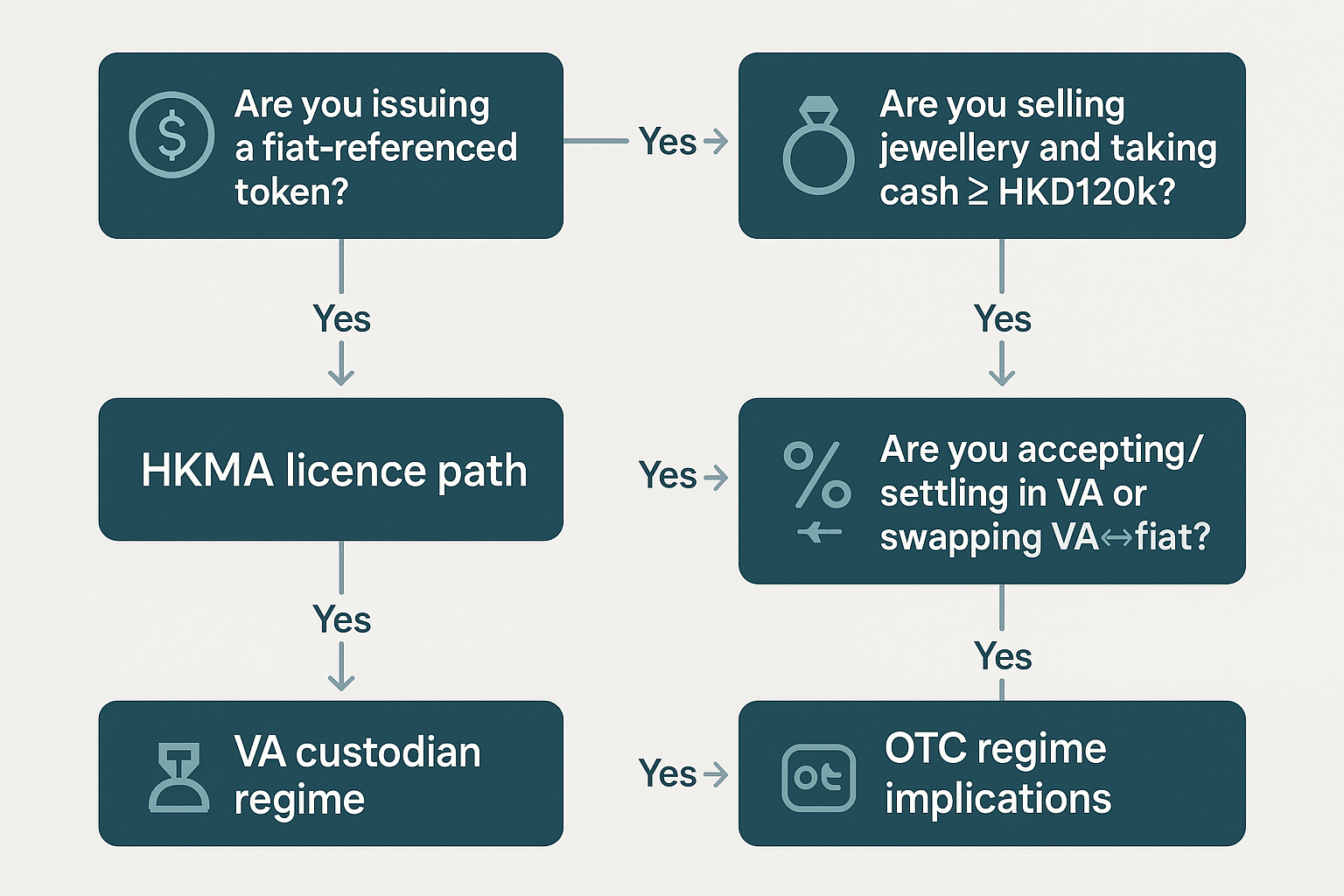
- Virtual assets are not “cash,” but real-world behavior blurs lines. If a DPMS accepts stablecoins or runs an “exchange desk” between stablecoins and fiat to close a jewellery sale, two things can trigger:
- You may be viewed as operating a VA OTC service subject to the proposed OTC regime under the AMLO. The Government has flagged powers similar to AMLO s.53ZRB, including blocking access to websites of non‑compliant operators. See OTC consultation: FSTB link; AMLO s.53ZRB on e‑Legislation.
- If you custody customers’ coins or hold their private keys “for them,” you could be caught by the forthcoming VA custodian rules — a different licence/registration from your DPMS status.
Actionable steps for founders and ops teams
- If you’re building a fiat‑referenced stablecoin:
- Design for one-to-one reserve, daily reconciliation, independent attestations, and clear redemption terms.
- Separate issuer, reserve management, and custody functions; ensure wallet segregation and disaster recovery runbooks.
- Prepare an AML/CFT programme aligned to HKMA expectations (high-risk geography screening, travel rule integration, blockchain analytics with case notes).
- If you’re running a DPMS or hybrid retail concept:
- Register (Category A or B) with Customs; if cash ≥ HKD 120,000 is possible, go Category B and implement full AML.
- Decide your stance on VAs at point of sale. If you accept VAs, implement VA-specific CDD, source-of-funds checks, and chain analytics — and plan for a separate OTC/custody licence if you hold or swap tokens.
- Avoid accepting algorithmic “stablecoins” for settlement; set a whitelist policy for licensable fiat‑referenced tokens only.
- For OTCs and wallets:
- Prepare for website blocking/takedown risk if operating without the coming licence. Build compliant onboarding, travel rule, recordkeeping, and segregation now.
Quick comparison
| Topic | HKMA Stablecoin Issuer (proposed) | VA Custodian (proposed) | DPMS Category B (in force) |
|---|---|---|---|
| Core activity | Issue fiat‑referenced token | Safekeeping of private keys/client VAs | Dealing in precious metals/stones with large cash |
| Backing/capital | Full reserve, disclosures | Financial resources, insurance/SAO | No capital rule; AML focus |
| AML/CFT | Full programme; travel rule | Full programme; wallet monitoring | CDD, STRs, training, audit |
| Asset segregation | Mandatory | Mandatory | Not applicable to VAs |
| Marketing limits | Likely no “algorithmic” | N/A | Limits if offering VA services |
Final word Don’t bolt crypto rails onto a PMS shop and hope it slides under the radar. Map your business flows to the right licence stack, keep algorithmic tokens out of “stablecoin” lanes, and build custody and AML controls as if the inspections start tomorrow — because they will. If you need a readiness review or product‑to‑licence mapping, StanCOMP can run it in two weeks with a punch‑list you can actually execute.


