
HK Compliance Brief: FATF-Ready X-Border Crypto Payments

HK Compliance Brief: FATF‑Ready X‑Border Crypto Payments
Introduction Cross‑border crypto payments are moving from “experimental” to operational. With the Financial Action Task Force (FATF) tightening timelines — revised standards due by end‑2030 with detailed guidance in 2026 — and Hong Kong doubling down on international norms (IOSCO, FSB, Basel), VASPs, OTC desks, and payment firms can’t treat Travel Rule and AML as box‑ticking anymore. The upside: better transparency and fewer payment errors in international corridors. The downside: higher regulatory expectations and less tolerance for excuses.
What changed in 2025 (and why you should care)
- FATF trajectory: Revised Recommendation 15 for VASP regulation remains, and the June 2025 FATF update sets an end‑2030 implementation expectation with guidance in 2026. Why it matters: consistent sender/beneficiary data flowing across borders and better fraud/error control. See FATF overview: https://www.fatf-gafi.org.
- Hong Kong policy alignment: The government’s digital asset push explicitly references IOSCO’s crypto market recommendations, FSB’s global framework, and the Basel Committee’s prudential crypto exposure treatment — a clear signal that local rules will track these standards.
- Stablecoins flagged: The BIS has underscored stablecoin vulnerabilities to ML/TF and sanctions evasion; FATF reiterates the risks of unhosted wallets due to anonymity and mobility. Expect heightened scrutiny on stablecoin rails and off‑ramps.
- Local scope widening: HK’s consultations on VA custodians and OTC regulation emphasize AML/CTF compliance under FATF, including CDD and recordkeeping, to counter layering risks at fiat interfaces.
What to do now: a 90‑day, FATF‑ready blueprint
- Travel Rule data model
- Implement IVMS101 messaging end‑to‑end; pre‑validate mandatory fields (originator/beneficiary name, account/VA address, VASP identifiers, and unique transaction reference).
- Apply FATF thresholds (USD/EUR 1,000) with risk‑based controls below threshold.
- Counterparty VASP due diligence
- Maintain a live registry of counterparties: license status, jurisdiction, Travel Rule endpoint/version, escalation contacts.
- Enforce routing rules: do not transmit to VASPs without secure Travel Rule capability unless you apply a documented, risk‑based workaround with enhanced screening.
- Unhosted wallet controls
- Collect and verify payer/beneficiary data where feasible; use blockchain analytics to risk‑score addresses; block mixers, sanctioned and high‑risk clusters.
- For stablecoins, monitor issuer blacklists, freeze mechanics, and redemption pathways to banks (layering risk).
- Sanctions, ML/TF, and fraud
- Real‑time sanctions and PEP screening across message data and on‑chain addresses.
- Velocity and structuring detection across corridors; investigate repeated sub‑threshold transfers.
- Recordkeeping and audit trail
- Retain Travel Rule evidence and CDD for at least 5–7 years (align to AMLO/SFC guidance). Ensure tamper‑evident logs for both message and on‑chain events.
- Governance
- Name accountable executives; conduct quarterly testing; document residual risk where counterparties lack full compliance (“sunrise” problem).
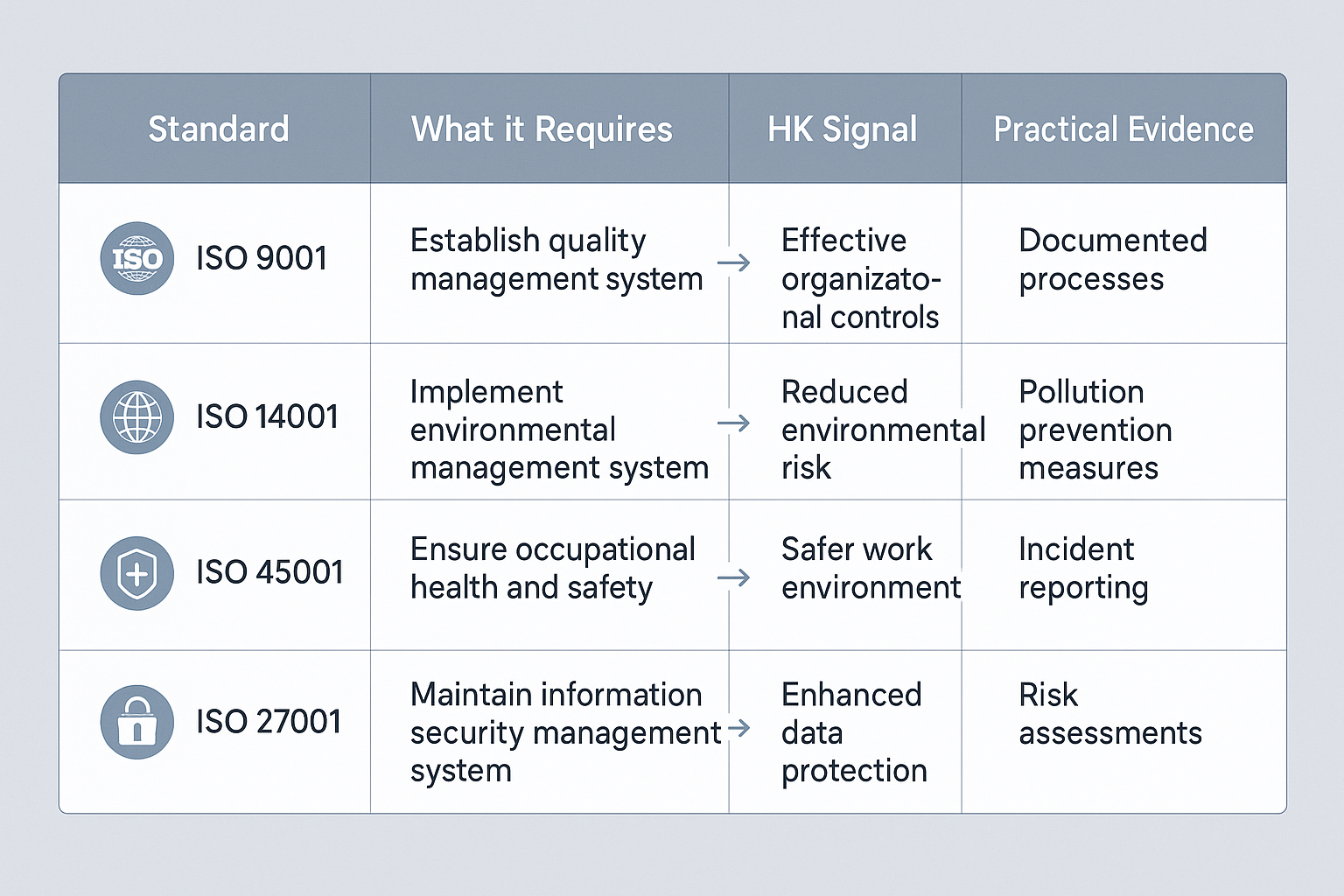
| Standard | What it requires | HK signal | Practical evidence you should keep |
|---|---|---|---|
| FATF R.15/R.16 (VASPs/Travel Rule) | Regulate VASPs; transmit originator/beneficiary info | Embedded in HK AML/CTF expectations; OTC and custodians moving into scope | IVMS101 messages, pre‑validation logs, failed‑message handling, sanctions hits and dispositions |
| IOSCO crypto markets | Market integrity, conflicts, disclosures | Referenced in HK policy stance | Rulebook, surveillance alerts, market abuse cases |
| FSB global framework | Consistent cross‑border oversight | Referenced by HK | Cross‑jurisdiction policy mapping, counterparty VASP due diligence |
| Basel crypto exposure | Bank capital treatment | Informing bank partners and custodians | Bank attestations, segregation/custody reports |
Operational benchmarks (illustrative targets)
-
99% Travel Rule message pre‑validation rate before broadcast.
- <5% sanctions false positives after tuning within 8 weeks.
- <2 hours average time‑to‑resolve Travel Rule exceptions.
- 100% of stablecoin off‑ramps screened for issuer blacklist/freeze risk.
Key references
- FATF: https://www.fatf-gafi.org
- IOSCO Crypto/Digital Asset Recommendations: https://www.iosco.org
- FSB Global Framework: https://www.fsb.org
- Basel Committee on crypto exposures: https://www.bis.org/bcbs
- Hong Kong VA policy direction (Policy Statement): https://www.info.gov.hk/gia/general/202210/31/P2022103000521.htm
- HKMA stablecoin policy work: https://www.hkma.gov.hk
- SFC AML/CTF for VATPs: https://www.sfc.hk
Bottom line Cross‑border crypto payments will only scale if compliance travels with the funds. Build Travel Rule plumbing now, tighten controls on unhosted wallets and stablecoins, and document everything. If you’d like a quick gap‑scan against FATF, IOSCO, FSB, and Basel expectations tailored to your corridors, we can complete one in 10 business days — and leave you with an audit‑ready evidence pack.


